Experts warn that the additional transfer fees, which goes into effect April 1, will trigger a flight to the suburbs, more home renovations and constrained supply just below C$3 million
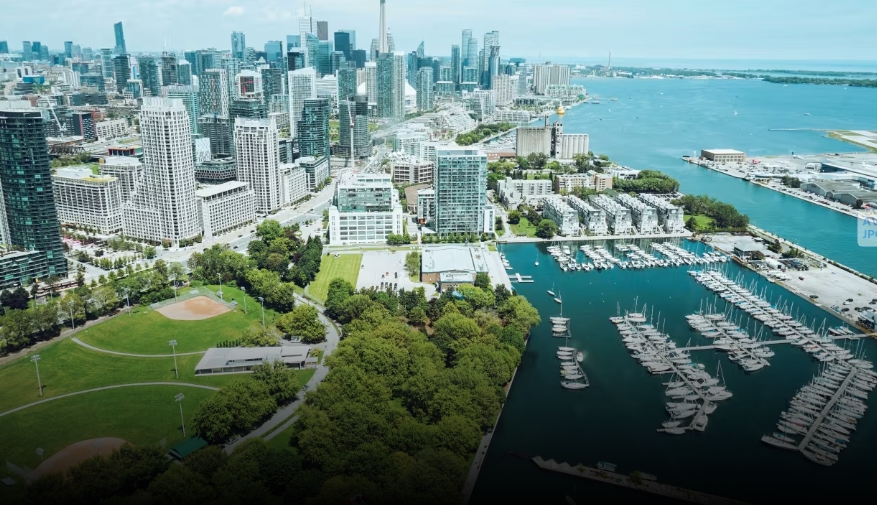

Toronto’s luxury real estate industry expects the city’s beefed-up mansion tax, set to take effect April 1, to dampen sales, discourage buyers and fall short of tax revenue the city has predicted it will raise.
The measures expand on levies introduced in early 2024, mandating higher land transfer taxes across five price tiers, from C$3 million (US$2.16 million) to over C$20 million. Land transfer taxes are paid by all buyers of residential property in Toronto, while the province of Ontario imposes a separate land transfer tax, which is not increasing.
Buyers of entry-level luxury homes priced right around where the tax increase kicks in will be the most affected by it, said Andy Taylor, an agent with Sotheby’s International Realty Canada.
“The lower you are, the more price-conscious you are,” he said. “But if there’s a need to move, like proximity to a school or a life change, a 1% increase in the land transfer tax will not stop them from making the acquisition.”
But elevated costs may paralyze upward mobility, he said. “Buyers who were thinking about moving from a condo to a house, or from a C$2 million home to a C$4 million home, are going to think twice,” Taylor said. “You’re going to see greater demand in that C$2 million-C$3 million range as a result. That will put pressure on pricing. And once potential sellers say, ‘I’m going to renovate instead of selling,’ that means less inventory in that lower price range.”
Flight to the Suburbs
The biggest beneficiary of the tax could be luxury-home sellers in areas just outside city limits.
Some buyers are choosing to bypass the tax by leaving Toronto for affluent nearby communities like Oakville, Caledon, and King City, said Cailey Heaps, president and CEO of the Heaps Estrin agency. Others are bidding adieu to Canada altogether.
“I have three sellers who are leaving for the U.S. because of taxes. If you want leaders to live in this city, you have to stop making them feel like they’re being attacked,” she said.
Even buyers who can afford C$20 million homes “are considering areas like Mississauga and Oakville, with the land transfer tax as a consideration,” said Saul Sanchez, an agent with Chestnut Park Real Estate/Christie’s International Real Estate. “Luxury buyers are smart. It’s not like they don’t care about costs.”
But not everyone sees the tax as toxic.
“I’m an optimist. There will be a period for consumers, and the market, to accept it,” said Giuseppe Flammia, an agent with Engel & Völkers Toronto City. “Does it have an effect? Sure. But on a C$3 million home, we’re talking about a C$30,000 difference. We just put together an offer on a C$3.4 million house. The buyer knows about the tax. But they want the house, and it’s in their price point. We just negotiated harder.”
As for the condominium market, “a luxury buyer who’s set on living downtown will just factor in that additional charge,” Flammia said.
A Hit to the Entry-Level Luxury Market
While the City of Toronto says the new taxes make “life more affordable for families by asking luxury-home buyers to chip in more,” the effort is misguided, said Heaps of Heaps Estrin. “C$3 million in Toronto is not ultraluxury. It’s hardworking parents trying to provide a nice lifestyle for their kids. And those parents are already heavily taxed,” she said.
In a December speech to Toronto’s City Council, Mayor Olivia Chow cited a C$20 million home with “10 bathrooms, 23 parking spaces, an indoor pool and marble and crystal finishes” as a prime target. “It’s idiotic for the mayor to use a C$20 million home as an example of why this makes sense. That’s a tiny segment of the market, and those hurt are in tiers below that,” Heaps said. “This tax will lead to lower volume and fewer sales, which will lead to less revenue than the city claims.”
The results of Measure ULA in Los Angeles may prove Heaps right; the 2023 law increased transfer taxes for property sales over US$5 million.
“One of the unintended consequences [of ULA] is reduced reassessment activity, which historically has been a key revenue driver for the city’s general fund and for services that benefit all residents, including public schools. With fewer properties changing hands, that reassessment pipeline has slowed,” said Michael Nourmand, president of the Nourmand and Associates real estate agency in Los Angeles.
“The measure’s impact also ripples through the market ecosystem. A single sale typically supports a range of ancillary professionals, from inspectors, contractors, subcontractors, moving companies, cleaning companies, escrow companies, title companies, cleaning crews and real estate agents, all of whom see diminished activity when fewer transactions occur. For developers in particular, the cost structure has shifted,” Nourmand said.
With Toronto home sales at a 25-year low, according to a report from the Toronto Regional Real Estate Board, higher taxes will offer diminishing returns, said Christopher Bibby, president of Re/Max Hallmark Bibby Group Realty.
“If things were roaring, it’s one thing. But at the moment, with transactions at record lows, the city’s not going to be much further ahead,” he said. “This will curb buyers even further from wanting to make a move. It’s the psychological component of yet another expense. Property taxes keep going up. The foreign-buyer ban is still in effect. It just feels like consecutive years of hits.”
Sales Will Spike Ahead of the Tax
For buyers intent on beating the April 1 increase, “go forth now and begin negotiations on the property you desire,” Flammia said. Sellers, likewise, “should know there could be advantages to getting their home on the market immediately,” said Sanchez of Chestnut Park Real Estate. “However, if a home needs work, it still makes sense for sellers to take time to complete that work to market the home properly, regardless of April 1.”
Despite the higher transfer taxes, Heaps is advising clients on both sides to move on transactions. “Buyers should realize we’re in one of the most favorable buying environments in Toronto in three decades. Though the tax is discouraging, it’s offset by current pricing.”
In Toronto, the median price of a single-family detached is C$1.54 million, while the median price of a condominium stands at C$644,700, according to an October report from Royal LePage real estate. Both figures represent substantial year-over-year price declines.
“If a buyer can get ahead of the April 1 deadline, do it. But we probably won’t see a return to peak prices for many years, so there’s really nothing to wait for,” Heaps said. “And if someone’s moving for the equity pull, the stock market will likely keep outperforming housing. Whatever they ‘lose’ will be gained in stocks.”
Mansion Global January 9, 2026 By Michael Kaminer