This outdoor feature that proves everything is better al fresco

Here is a collection of amazing pergola ideas to help you find inspiration to create the perfect ambiance for your outside living room, from Mediterranean-influenced designs to modern pergolas, and poolside pergolas to firmly earthbound ones. But first, let’s answer some basic questions to get you on your way to living your best pergola life.
What is the point of having a pergola?
Before you upgrade your outdoor living, it’s important to understand the difference between a pergola and a gazebo, among other common outdoor structures—and it’s a minor but important one that will greatly affect your design ideas for your outdoor living space.
A gazebo is a freestanding structure that has a full roof. They’re typically octagonal, often screened and with their own decks—though none of those elements are actually requirements for a gazebo.
An awning is a shade cover that juts out over an area. They’re often attached to the wall of a home, and they don’t include walls—they’re basically small, extendable roofs.
A privacy screen, on the other hand, is all wall, a visual barrier that’s often used to block the view your neighbors have into your yard—and you’re not going to get much shade from a privacy screen unless you’re sitting right next to it. The same goes for a trellis, which is a latticework or framework used to support and train the growth of climbing plants. A trellis could be freestanding or built on to an existing structure, like the side of a home—or a pergola.
So what is a pergola, then? Like a gazebo, it’s a structure that provides shelter and some shade from the elements, but unlike a gazebo, it doesn’t have a full roof and is designed to let some sun in at least part of the time. It can be freestanding or built onto an existing structure. (Narrow pergolas built onto the sides of homes are sometimes called “eyebrow pergolas,” as they kind of make your home look like Groucho Marx.) But a pergola can also incorporate elements of the other outdoor structures we’ve discussed, too, like a retractable awning as an optional pergola roof for complete sun coverage, or having a wall or trellis that acts as a privacy screen. Beyond the practical, there’s also the landscape design aspect: The best pergola can provide a perfect focal point for your outdoor space, and they will take any deck ideas you’re considering to the next level.
“There’s really two main reasons to build a pergola,” says New York City–based landscaper Amber Freda, president of Freda Inc. “One is function and the other is aesthetics—it can enhance an ambiance, create a sense of intimacy. The functionality is providing a shade structure and area for seating that gets you out of the sun.”
What are the pros and cons of a pergola?
So is a pergola the right choice for you? It depends on your outdoor living situation and what you want out of your potential pergola design, according to Freda.
Among the benefits of getting a pergola is a combination of the aesthetics and sturdiness, she says. “People like the look of it more than a shade sail or umbrella. It looks more built-in, custom-made and it’s more of a substantial structure. You don’t have to worry so much about the wind, like with an umbrella or sail.”
With retractable roofs and sides or features such as open-and-close slats, pergolas can also be more adaptable to your particular climate than a temporary shelter. “Standing umbrellas and awnings are mostly overhead shade,” Freda says. “In a pergola, you can also have a retractable canopy that comes down on one side. You can pull these blinds down that’ll give you better sun protection than the other options.”
Pergolas are often sturdy enough to be the ideal outdoor structure to train climbing plants on, though you’ll have to take into consideration that, eventually, your wisteria may interfere with having a retractable pergola roof.
But at the same time, a pergola doesn’t go overboard and verge into looking like an immutably permanent outdoor structure, like a gazebo sometimes can. A backyard pergola is also a better option for those worried about patio space—a pergola may be easier to fit into a small backyard than even a modest gazebo. “Gazebos [can feel] a little outdated,” Freda says. “Pergolas are more contemporary-looking.”
Another leg up pergola design has over gazebo design? You can enjoy the “outdoor” part of “outdoor living” more. “Pergolas are meant to be able to be opened to the elements, so you can let the sunlight and air in.
The biggest reason not to go for a pergola, especially a freestanding pergola, is that your outdoor space might be able to structurally support it. “A pergola needs to be anchored really—it’s a substantial structure but can still be blown over,” Freda says. “You can’t attach a pergola to 2-by-2 pavers on a roof.”
And though the grill master in you may automatically want to put a firepit or outdoor kitchen under your new corner pergola, doing so could pose a serious fire or smoke hazard. Check your local regulations to see whether that’s even allowed.
Is it cheaper to build or buy a pergola?
Like any outdoor structure, pergola design can range from affordable to crazy expensive. So it’s natural to wonder if a DIY patio pergola is the best pergola from your wallet’s point of view.
“Prefab pergolas are definitely less expensive,” Freda says. “Even when you add in having a contractor receive and assemble the pieces, it tends to be about half the price of a regular [custom-built] pergola, so it can be a good solution for people trying to save a bit.”
The biggest caveat? Pergola kits tend to be for fiberglass or metal pergolas made of slimmer, lightweight materials like aluminum. It’s critical to ensure the components are designed and put together in a way that’s structurally sound and able to support weight and wind.
Though they cost more, custom pergolas mean you get to choose your materials—if you love the idea of a wood pergola, for example, you may not mind splurging to ensure your yard is equipped with a cedar pergola, for example, or indulge your white pergola fantasy with an acrylic-painted, warp-resistant poplar.
Whatever you decide, remember that ultimately the best pergola is the one that makes outdoor living a bigger part of your day.

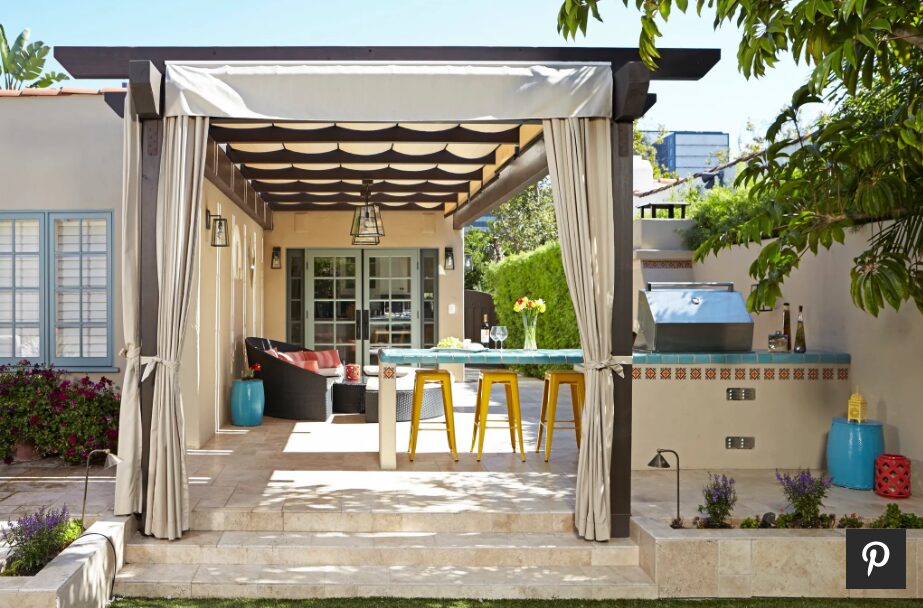
Photo: Douglas Hill
Bring the indoors out
When designing the backyard area of a 1920s Spanish Colonial, Abeer Sweis, design partner at SweisKloss, wanted to blur the line between interior and exterior for a space, adding elements such as a kitchen, fireplace, and a Perrenials fabric-covered pergola. “Once we brought in the pergola, the fireplace, and the water feature, the family had a real place to gather,” Sweis says. “The drapery makes the space feel intimate at night, the fireplace extends how late you stay out there, and the water feature changes the atmosphere in a way that’s hard to explain until you experience it.”

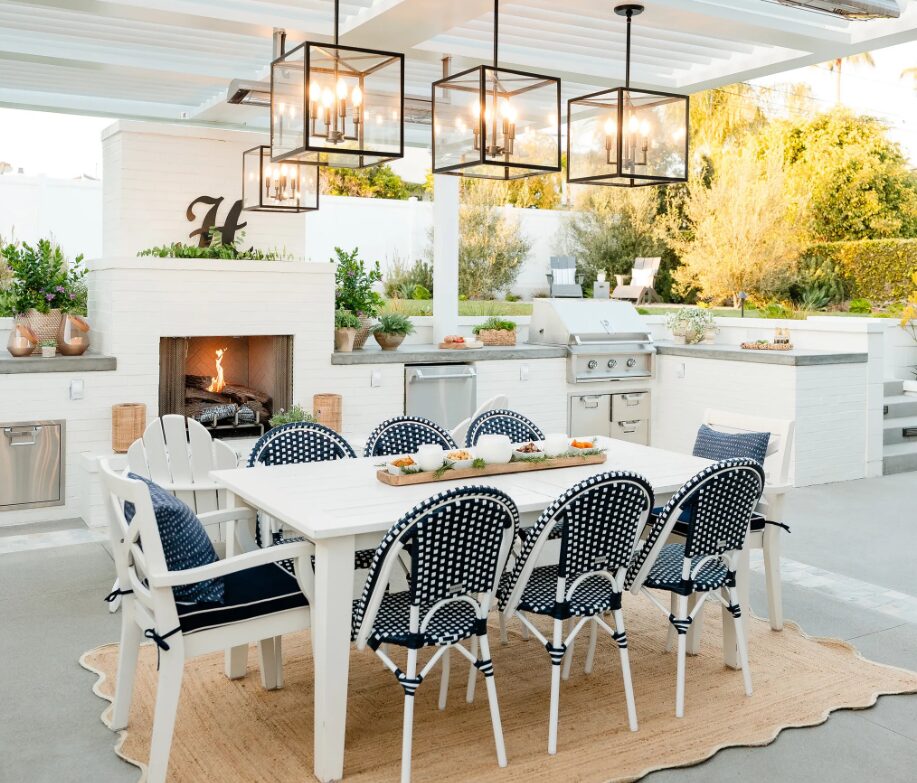
Photo: Sara France of Shay Studio
Optimize for year-round use
If you’re lucky enough to live in a warm climate like Southern California, a pergola can be designed to be used year-round. Sacha McCrae, owner and designer at Living Gardens Landscape Design, planned this pergola at a home in San Clemente, California, to be used rain or shine. “With sun for most of the year—and the occasional rain—the clients hoped to create a covered patio that would feel open to the sky yet offer shelter when needed,” McCrae says. “The adjustable louvers allow the homeowners to respond to the day as it unfolds. Left open, they welcome generous light into both the patio and the interior beyond. Angled or fully closed, they provide deep shade or a watertight canopy during unexpected rain.”
A modern, streamlined pergola.Photo: Hulya Kolabas Photography
Protect your privacy
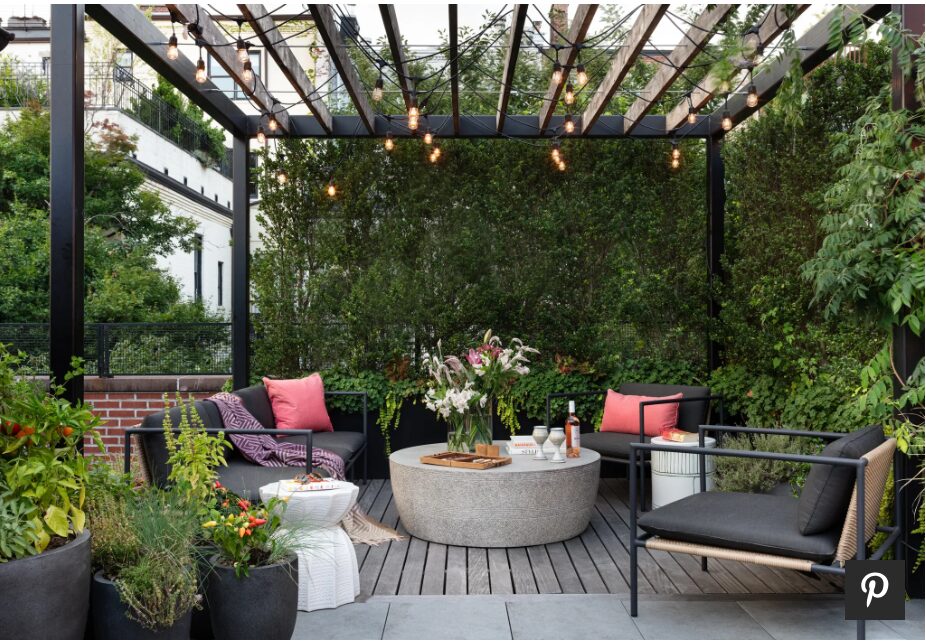
When adding a pergola to an urban space, nosy neighbors can be a concern. Working with Stollar Fearins Welch Architects, Liz Pulver, principal at Liz Pulver Landscape Architect, created an outdoor space on a Brooklyn roof terrace that feels welcoming yet sheltered. “We came to the idea of a pergola to create a semi-enclosed room in the garden and give them a genuine sense of seclusion,” Pulver says. “Two sides of the pergola are wrapped in a ‘wall’ of evergreen shrubs, which gives the client lovely vegetative screening all year long. Another side remained open to capitalize on beautiful sunset views over their green roof. A wisteria vine will climb over the rafters above. This ‘ceiling’ provides more shade and adds to the overall leafy green-garden feeling.”

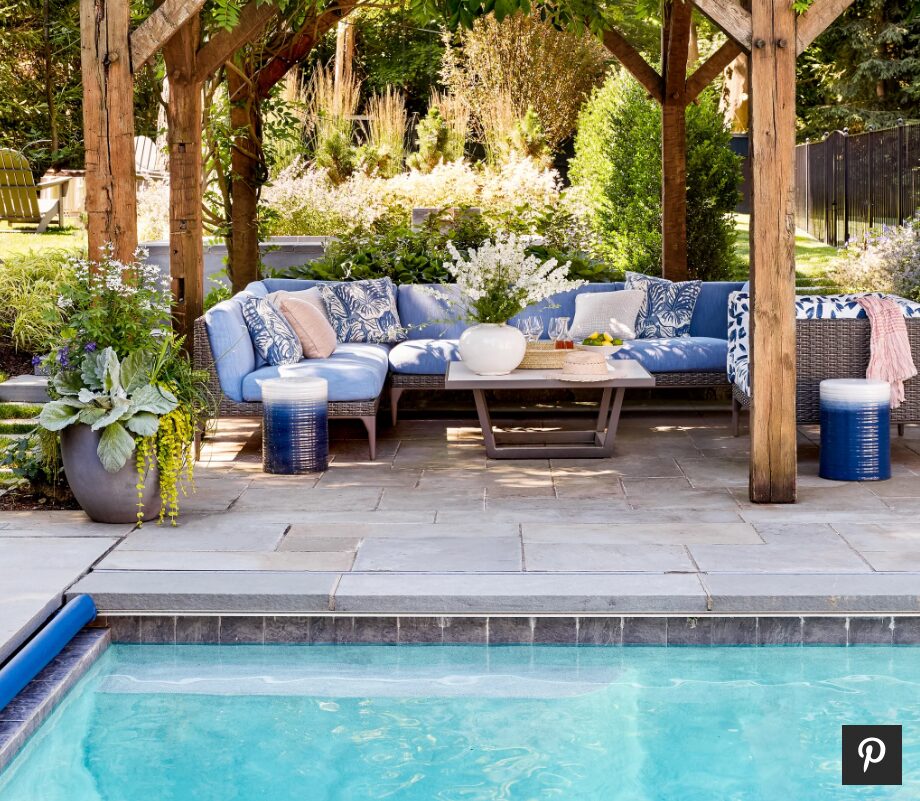
Photo: Rikki Snyder. Styling: Frances Bailey
Nod to nature
A 1785 house in Westport, Connecticut, is home to a rustic pergola beside the pool area. Designer Kathleen Walsh, principal at Kathleen Walsh Interiors, an AD Pro member, set out to highlight the pergola and the natural surroundings while creating a welcoming outdoor oasis. She juxtaposed the weathered wood structure with clean-lined furnishings. “The sectional is a selection from Dedon in a woven resin—a super-durable material for an area with extreme four-season weather,” Walsh says. “It’s also cool to the touch on the hottest days, and it doesn’t have the expansion and contraction issues of wood furnishings. A darker color tone for the furniture frame blends into the background, and a pop of calm watery-blue upholstery complements the pool alongside, both allowing the beautiful landscaping to dominate and read as a lush, vibrant sea of greens.”

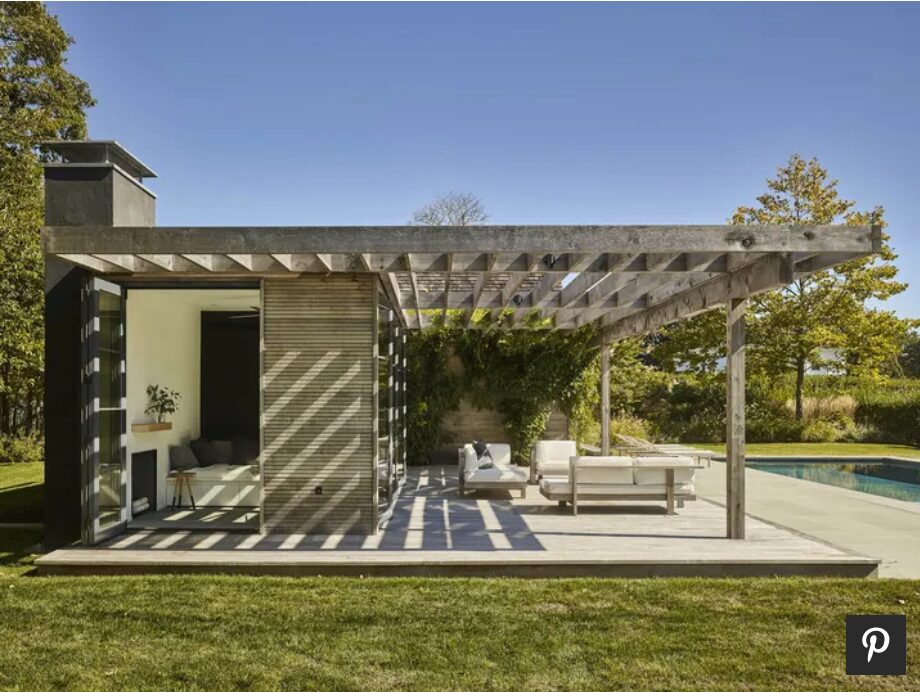
Photo: Frank Oudeman/Otto
Play with plants
Robert Young Architects extended the usable footprint of an Amagansett poolhouse by adding a greenery-covered pergola made of cedar, which is low-maintenance and will age beautifully over time. Owner and principal Robert Young notes that plants should be considered from the beginning of the design process. “A pergola is a living structure as much as it is an architectural one,” Young says. “The spacing and structural armature need to align with the growth habit of the vine. Some species drape heavily, creating a lush ceiling effect, while others grow more upright and require tighter spacing to achieve meaningful shade. Many flowering vines drop blossoms or leaves seasonally, so it’s best to avoid placing anything overly delicate or high-maintenance directly beneath.”

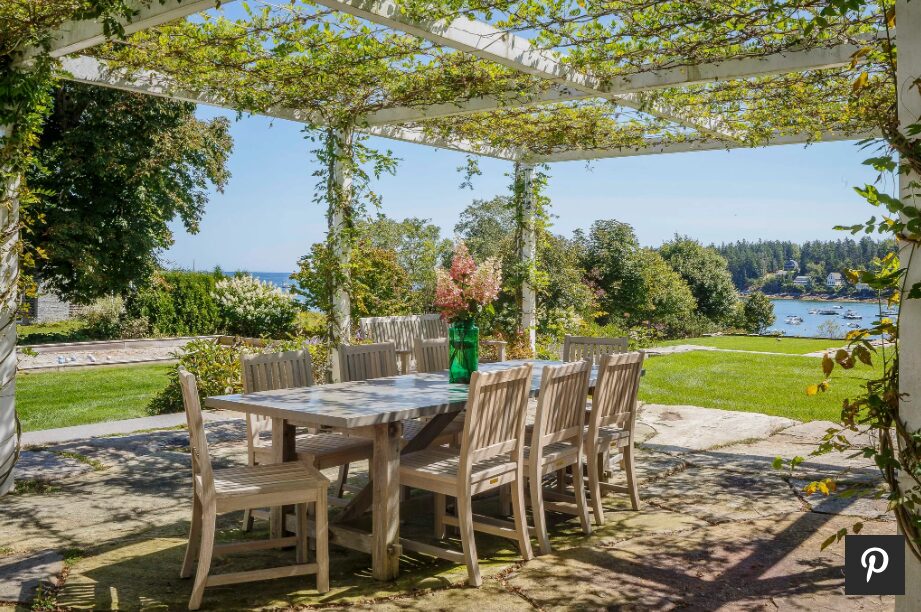
Photo: Sarah Szwajkos
Weatherproof it
“The seasons on the Maine coast are beautiful but can be brutal,” says Sarah Fischer, principal at Sarah & Sons Interiors, who created this pergola-shaded dining area with stunning water views. “Choosing long-lasting materials like powder-coated aluminum posts and stainless-steel cables rather than the traditional wood allows this pergola to endure the years in all weather. Each year the wisteria continues to grow around this durable structure, creating the feeling of an outdoor room where the homeowners can gather with family and friends during Maine’s legendary summers.”

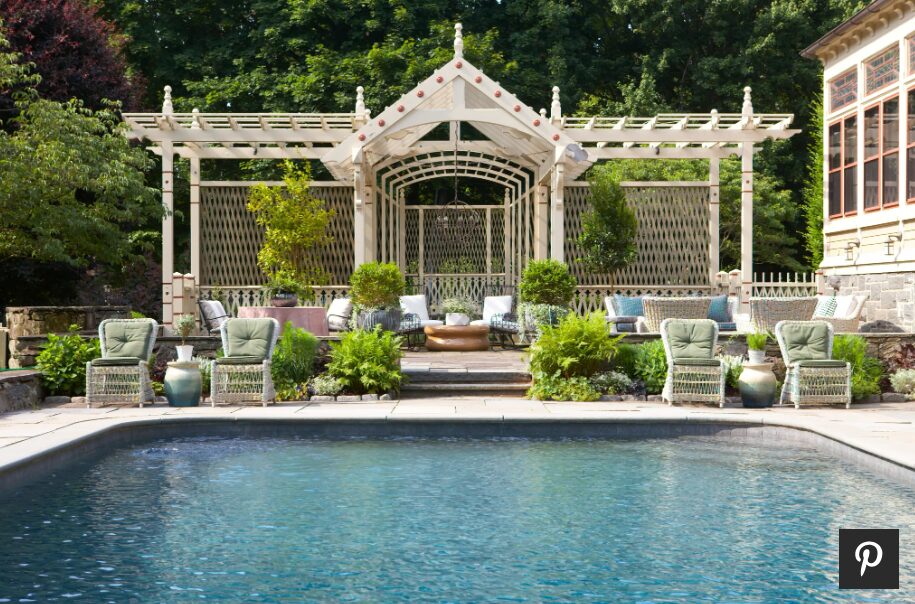
Photo: Michael Partenio
Work with the architecture
Designer Rachel Reider, principal of Reider + Co. and AD Pro member, made the most of the existing pergola at a Victorian country estate in Connecticut. Reider wanted to give the clients, an active young family, as much outdoor living space as possible, adding an outdoor dining area and multiple seating areas for entertaining or relaxing with a book. While Reider’s clients were fortunate enough to inherit their pergola, Reider advises working with the home’s architectural style when adding outdoor elements. “It’s important to consider how a pergola connects to the existing architecture so that it feels like it’s an extension of what’s already standing rather than an addition or afterthought,” Reider says. “Pergolas are a great way to define a space for multifunctional outdoor living, offer some shade, and add vertical greenery.”

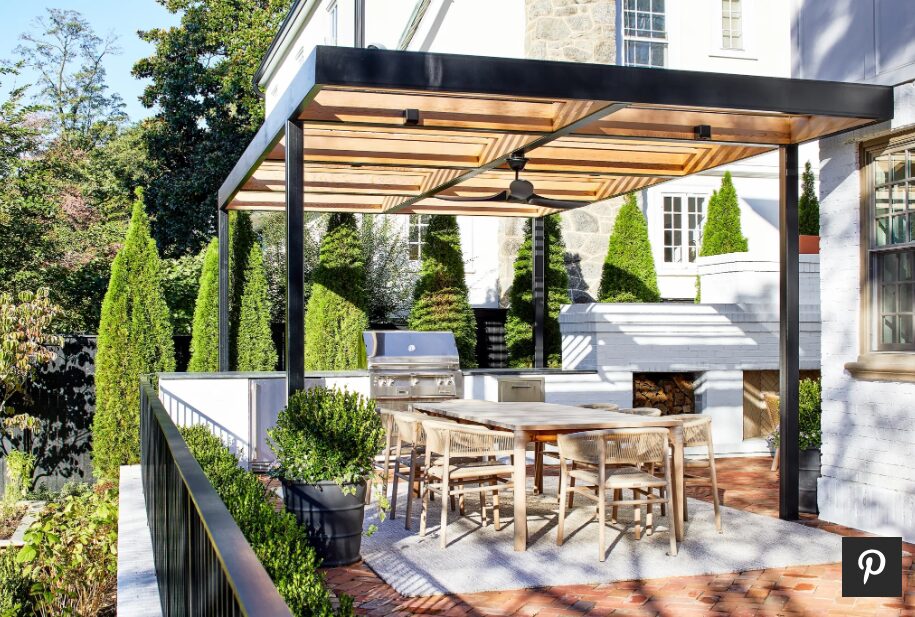
Photo: Stacy Zarin Goldberg
Mix modern and historic
At a 1919 home in Washington, DC’s Cleveland Park neighborhood, Richardson & Associates Landscape Architecture created a luxurious entertaining area for lounging and dining, topped with a steel-and-wood pergola. “We added a pergola to the terrace to thoughtfully address its southern exposure and its urban context,” founding principal Joseph Richardson says. “The structure tempers the strong sunlight throughout the day, creating a more comfortable and usable outdoor environment. It also introduces an architectural layer that enhances privacy in a relatively dense part of the city.” The steel frame is softened by clear-grade cedar, which adds warmth and texture to the structure.

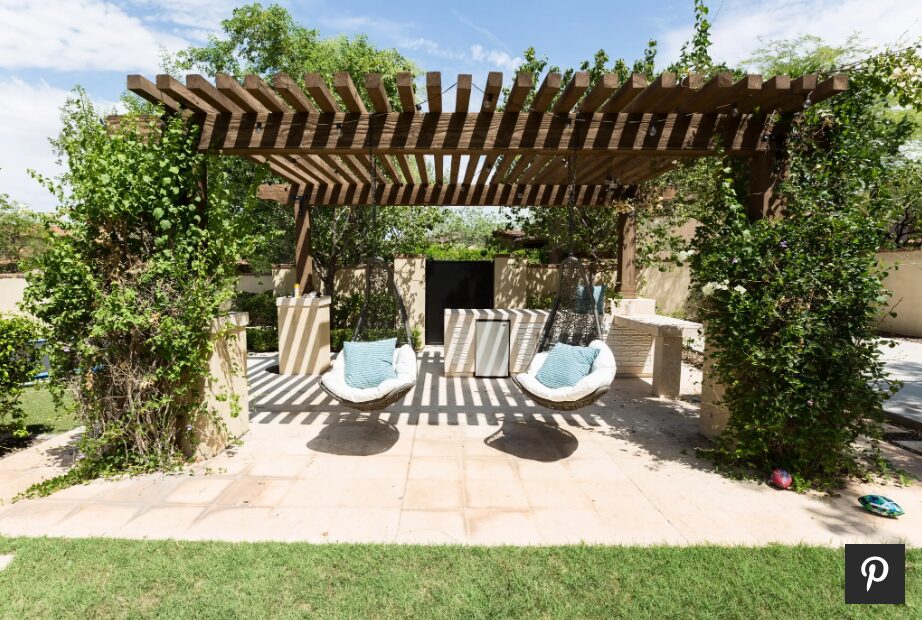
Photo: Life Created
Levitate in luxury
Comfy hanging chairs seem to float off the ground beneath this wood pergola that emphasizes a sense of levitation with climbing plants. An outdoor refrigerator and generous counters mean it can also double as an outdoor kitchen. “We often add retractable awnings as well so the tops can be completely covered as needed,” says Lauren Lerner, principal and owner of Living with Lolo, an AD Pro member.

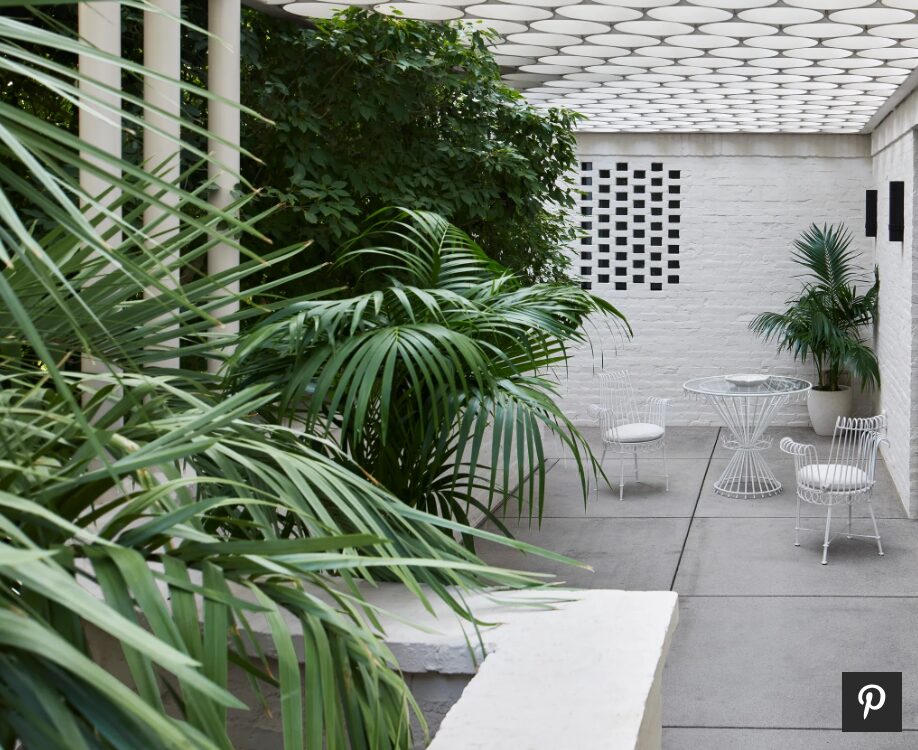
Photo: Stephen Johnson
Go Hollywood
To reinforce memories of 1960s Hollywood Regency style, interior designer Jamie Bush, an AD Pro member, and architect William Hefner reimagine a Los Angeles home for actress Mary Kitchen using an elegantly geometric pergola to complete the white-on-white cool of this patio.

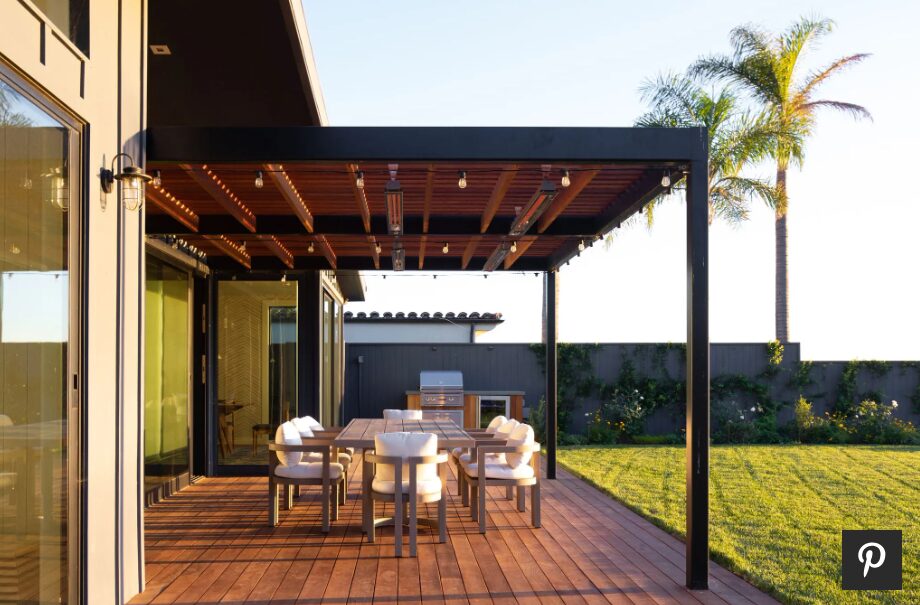
Photo: Alex Zarour/Virtually Here Studios
Select steel
The black steel frame with inset ipe joists—designed without visible weld joints of screw or bolt attachments—are meant to gray out in the coastal alt air of this seaside home. “The pergola ipe joists compliment the ipe deck below. This all lent a sense of serenity to the space,” say Kate and Ryan Gross of Kate Anne Designs. “In general, we will situate a pergola where it’s going to help frame a space, supply shade as well as create an architectural feature against the home, when applicable.”

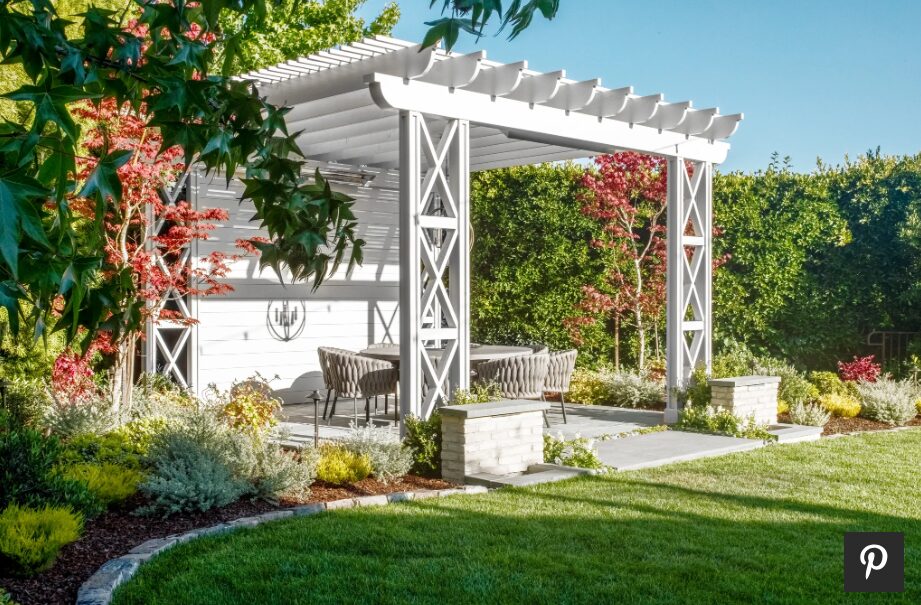
Photo: Jeffrey Brian Riemer
Go coastal
To achieve a coastal Hamptons feel, this wood pergola combined design elements to feel light, airy and whimsical but still an integral part of the home. “We incorporated a high ceiling, rear architectural panel to provide a backdrop and criss-cross framed posts, all which led to a feeling of the dining space being embraced by the pergola,” Kate and Ryan Gross say.

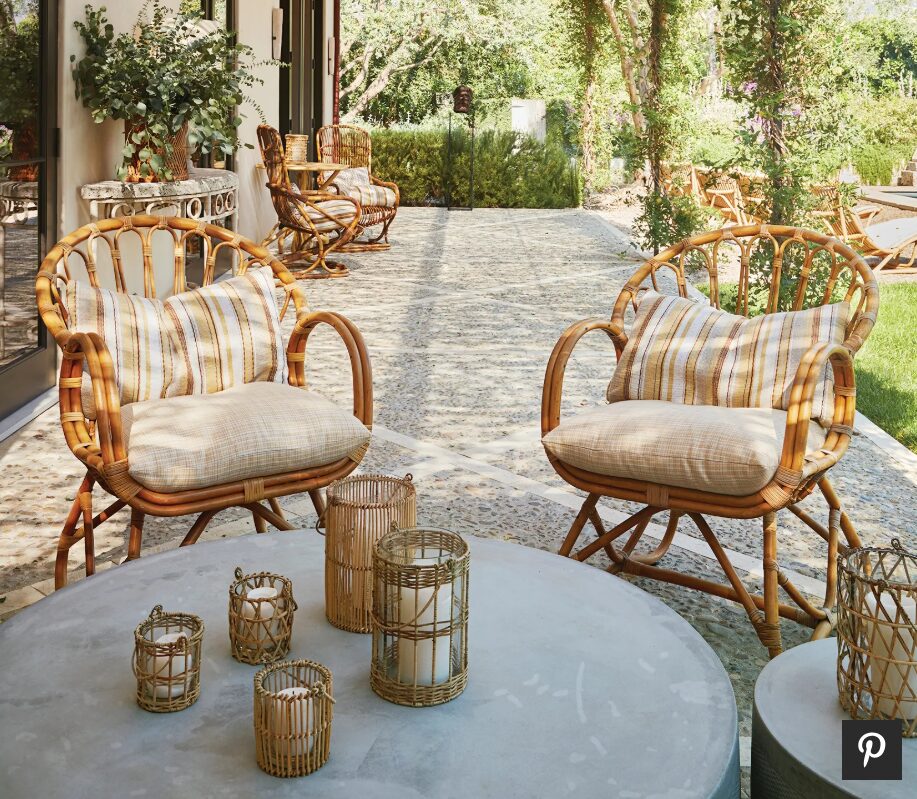
Photo: Laura Resen
Have a rattan plan
Using natural materials like rattan for a respite from the Montecito, California, sun, interior designer Suzanne Rheinstein, an AD Pro member, crafted a pergola-anchored getaway with an assist from Bories & Shearron Architecture.

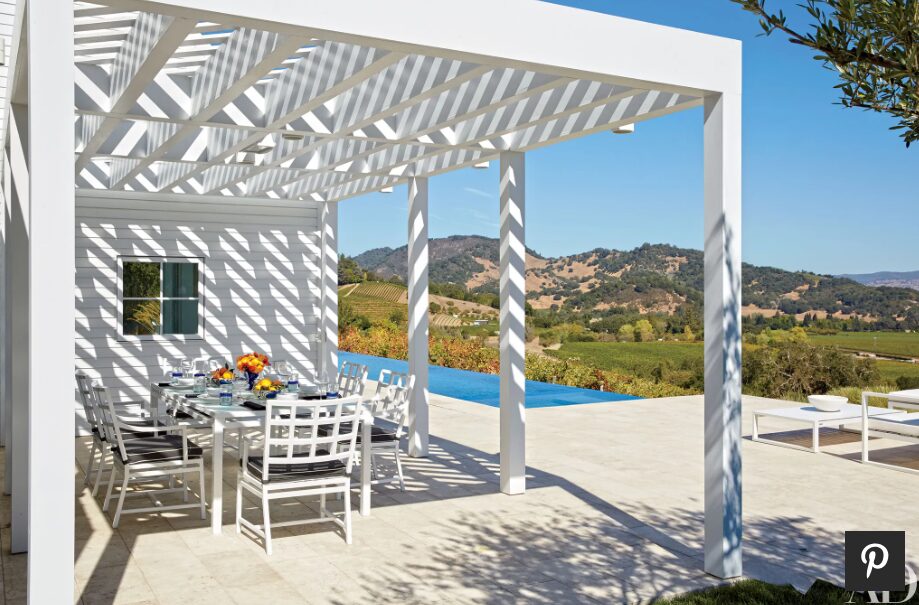
Photo: Roger Davies
Keep it simple
When the views are king, a simple pergola can let the natural beauty of the surroundings come through. The outdoor dining terrace of designer Jeff Atlas’s weekend home offers bucolic countryside views of Napa Valley, California.

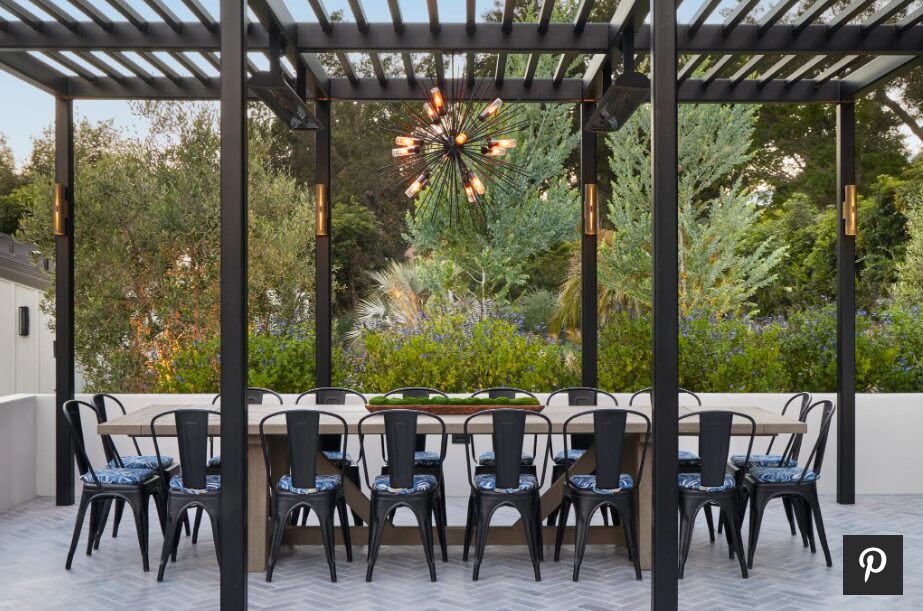
Photo: Caitlin Atkinson
Make it mid-century
With its striking midcentury-modern dandelion chandelier and subdued sconces, this pergola, designed by Jessica Risko Smith, is grounded and formal-looking enough to host an alfresco business meeting, but also perfectly suitable for an impromptu weekend family meal. The dark frame of the pergola is a striking contrast to the light stone floors and low outdoor walls.

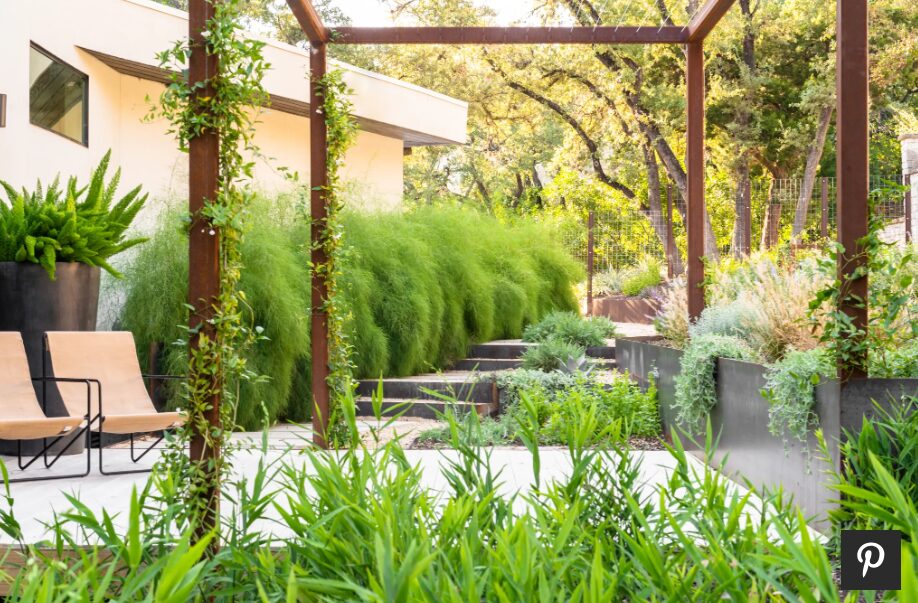
Photo: Greg Thomas
Plant a garden
In need of patio ideas but working with a small backyard, or simply want to keep it close to home? This patio pergola and its climbing plants (Bignonia capreolatata) shade a pebble-covered, cozy little outdoor dining area. “For the framing and fabrication, we used steel tubing into concrete footings,” says Amy Hovis, principal at Eden Garden Design. “We left the steel to oxidize naturally and added steel cable with turnbuckles to create the ‘trellis’ for the vines to grow up it. It was a nice modern minimalist gesture in front of a more traditional-style home. This simple pergola became this family’s most used room in the house, a flexible space for morning coffee, lounging and casual dinners outdoors.”

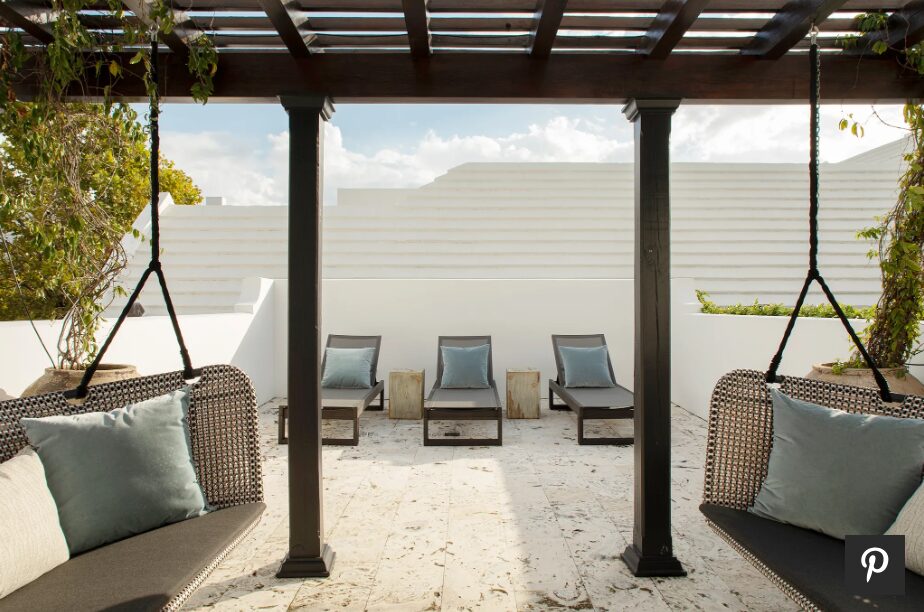
Photo: Jack Gardner
Relocate to the roof
Instead of going with a white pergola, this once-lonely rooftop structure provides a shady respite from the white-on-white environment of this treetop hideaway. “This rooftop terrace in Alys Beach [Florida] was hardly used until we reimagined it with a pergola and facing swings,” says Brad Ramsey, principal designer and founder of Brad Ramsey Interiors, an AD Pro member. “The addition of the pergola with pots and greenery along with the two swings creates a more intimate way to gather and enjoy sunset views. This is now a favorite gathering spot for our clients and their children and grandchildren to relax and connect.”
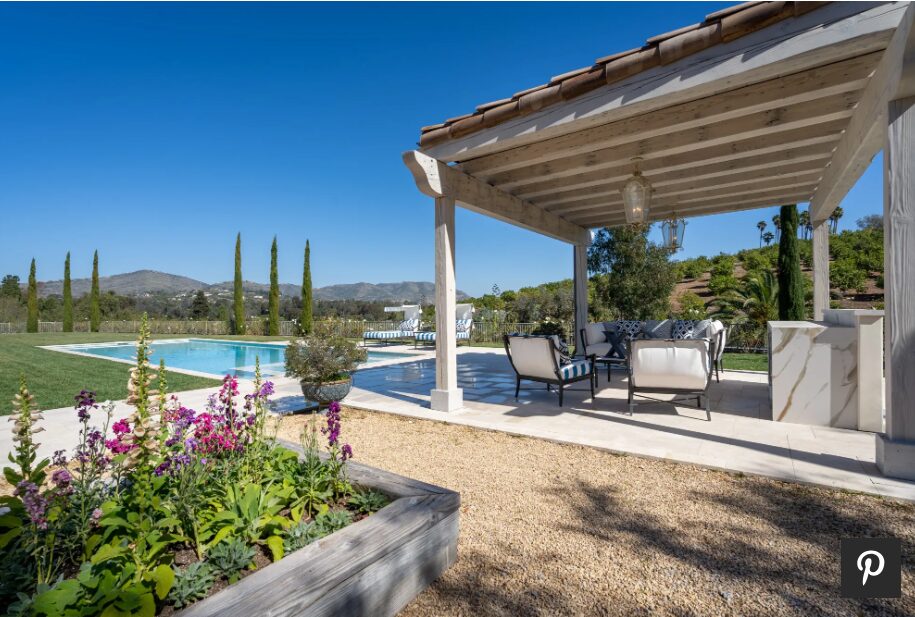
Photo: Shay Blechynden
Place it poolside
Kern & Co.’s white pergola gives bathers a perfectly framed views of the cypress trees for when they want to dry off out on the Andalusian outdoor furniture at this French-style farmhouse with unobstructed views of the scenery in Rancho Santa Fe, California. “The area provides cover for the pool and gardens and a beverage area for drinks and refreshments,” says Susan Spath, principal designer of Kern & Co.

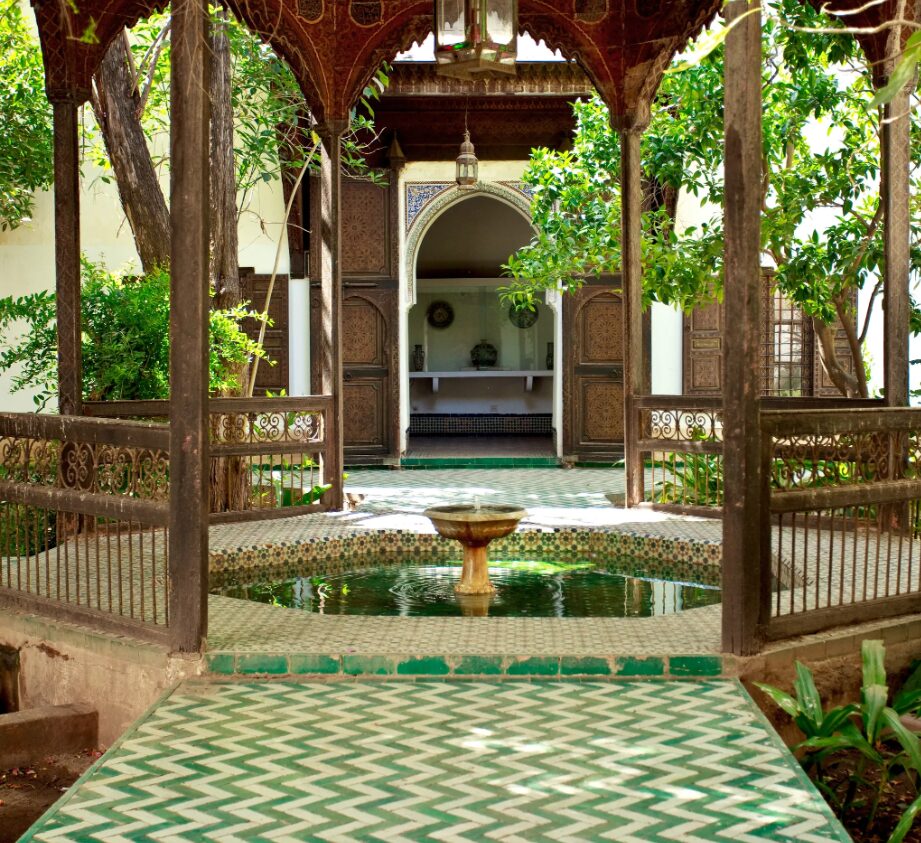
Photo: Kelly Cheng
Flip for a fountain
Elements like the dazzlingly tilework, Holy Grail-like fountain, hanging brass lanterns, and ornately detailed interior of the shrine-like central structure elevate this pergola from simple shade escape to near-religious experience. Unlike many of the other pergola ideas we’ve showcased here, this freestanding pergola doesn’t encourage you to linger and lounge but to pay respects to its grandeur while patiently ushering you along toward the cool recesses of the home’s beckoning interior.

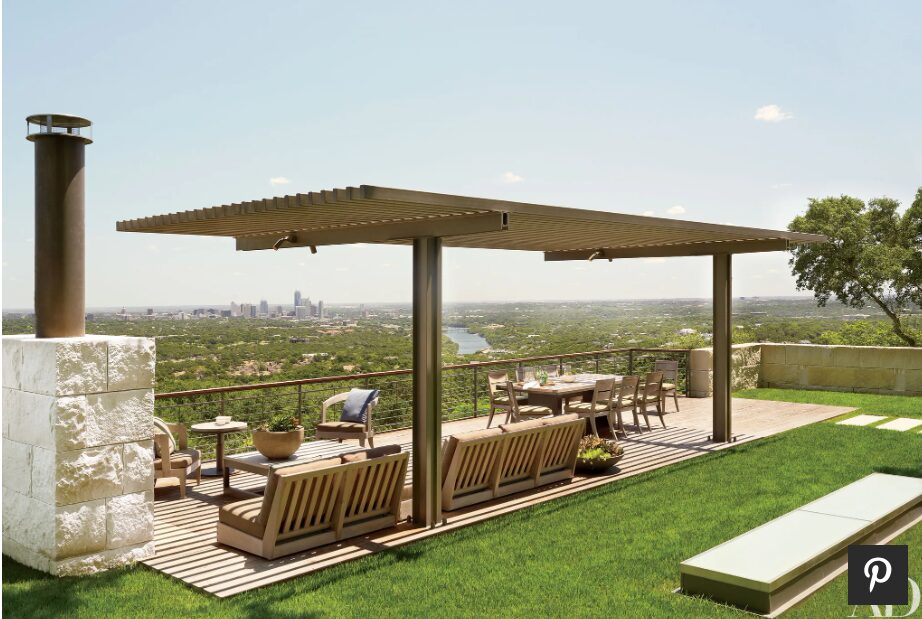
Photo: Pieter Estersohn
Make it minimalist
Less is more in this metal pergola at an Austin house. The steel complements the design of the ipe-wood terrace by Garden Design Studio and the architecture of the home.

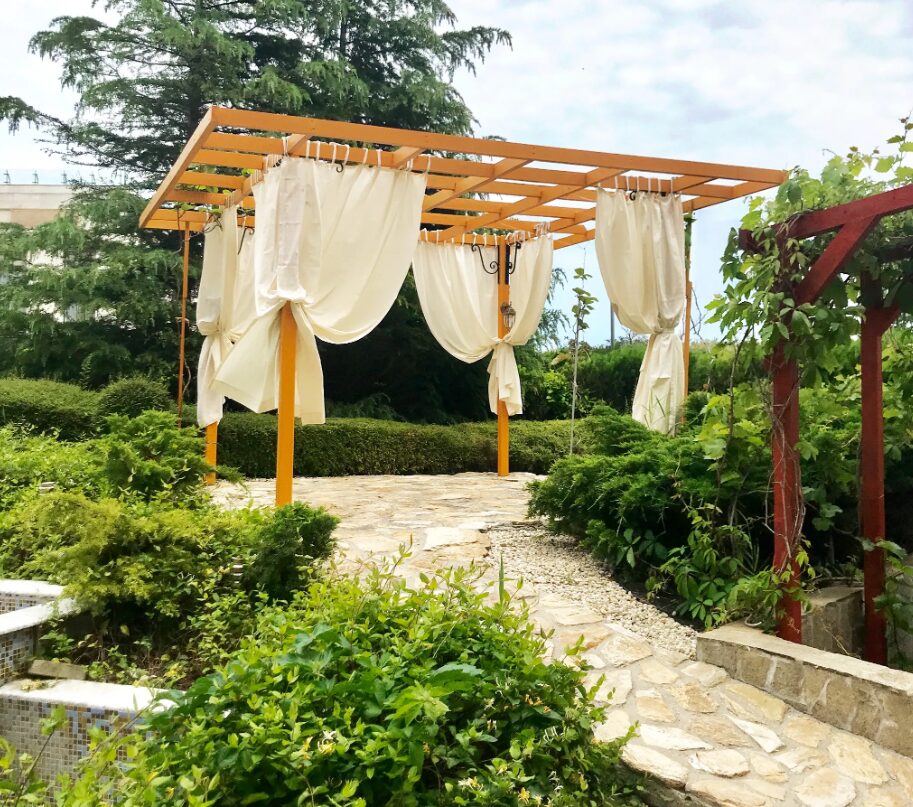
Photo: Nenov
Set up some shade
Answering only to the towering pines above, this grid-like outdoor pergola of light wood is draped with white cloth on loops, which can be extended to provide shade—or privacy—as needed.

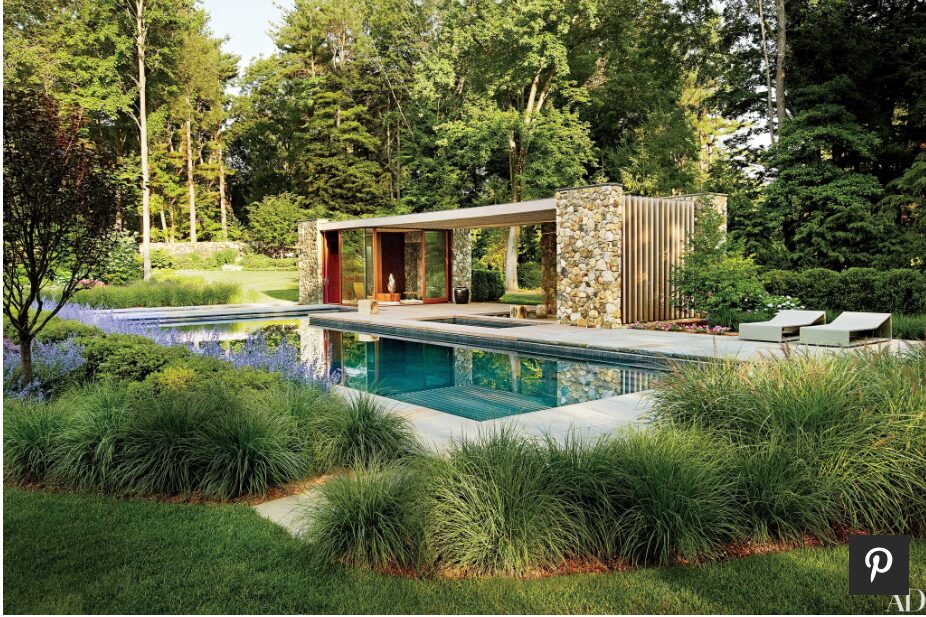
Photo: Adrian Gaut
Keep materials natural
Fieldstone and other natural materials make this cedar pergola—which acts as a pool house in Westport, Connecticut, by the New York City architecture firm SPAN Architecture, an AD Pro member—feel connected to its surroundings.

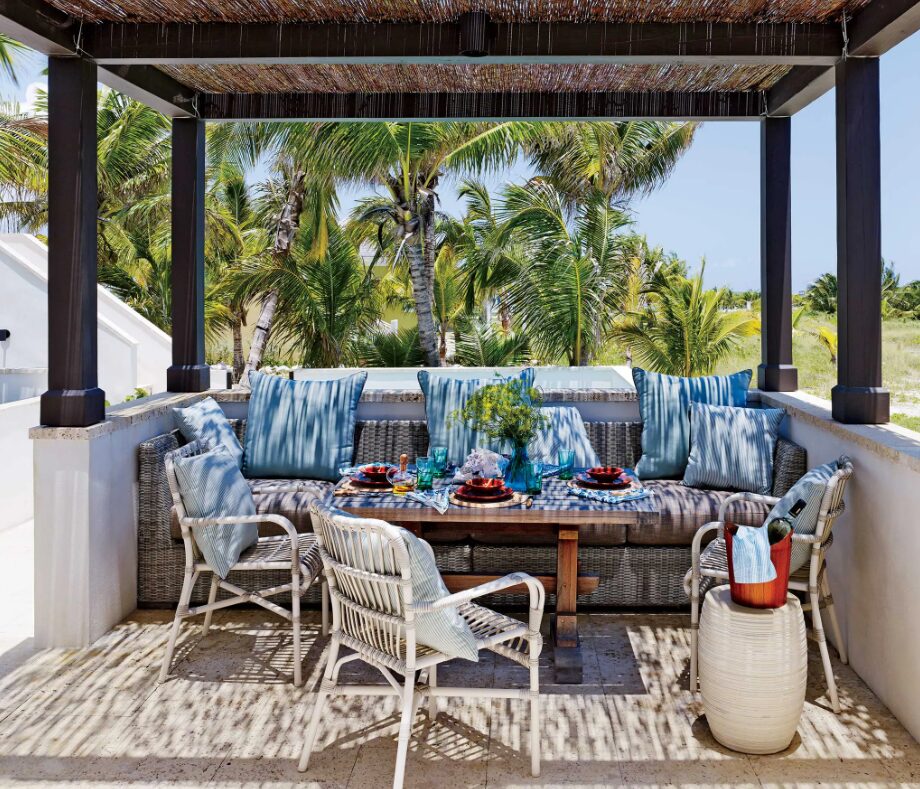
Photo: Björn Wallander
DIY with help from a big-box store
Sometimes the best pergola can come from surprisingly affordable places. Designer Tom Scheerer’s pergola roof at his secluded Bahamas vacation home was made from bamboo fencing from Walmart.

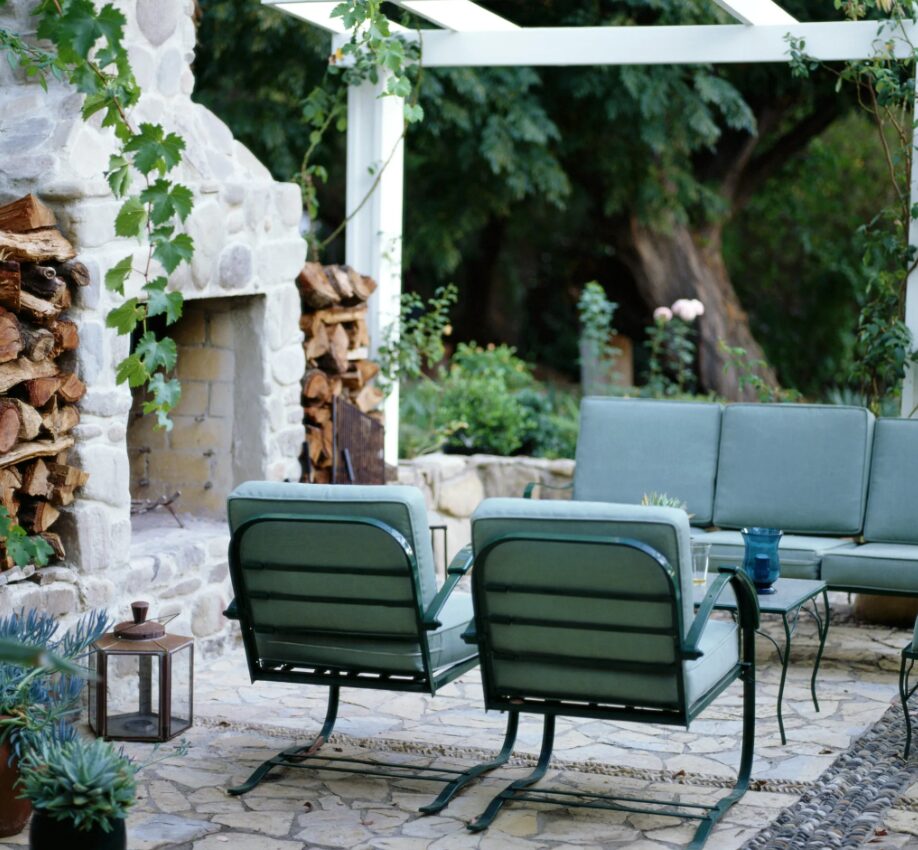
Photo: Victoria Pearson
Fit in a fireplace
Conveniently pre-split fire logs make a perfect accompaniment for the rough stone of this outdoor-fireplace-centric pergola area that’s more of an outdoor living room than anything else. Given enough time, the climbing plants might one day provide extra shade if trained on the pergola.

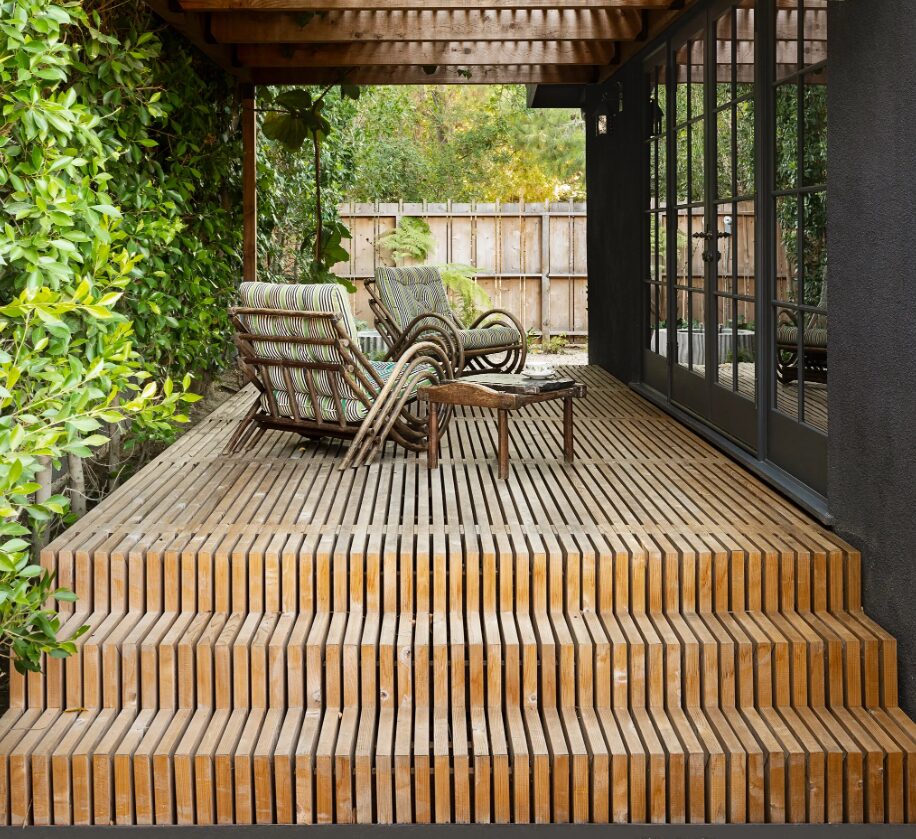
Photo: Laure Joliet
Follow the lines
Designer Jane Hallworth of Hallworth Design, an AD Pro member, helped actor Kirsten Dunst turn her LA home into country–meets–rock and roll, bounded on one side by a wall of greenery and the dark frame of the house on the other. The pergola above is made of a warm-colored wood but reflects the perfectly straight lines of both the deck and the doors and window walls, acting as a literal bridge between natural charm and manmade sophistication.

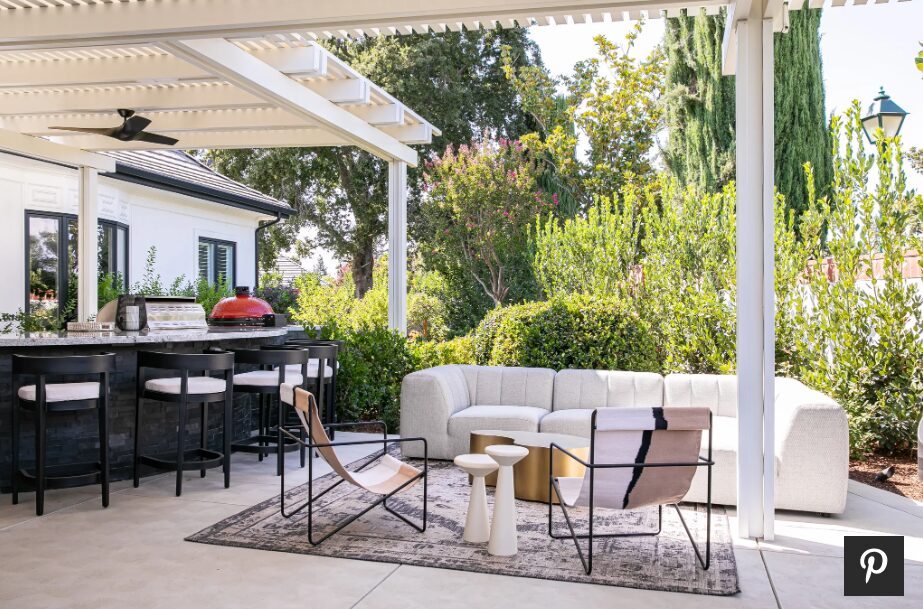
Photo: Ryan Garvin
Make it a “Bargola”
When the outdoor space includes several distinct areas that essentially replace indoor rooms, a pergolas can help define where one ends and another begins. This outdoor design, by Breegan Jane, incorporates sectionals, an area rug, accent chairs, and barstools with pops of brass against rich neutrals. The pergola sets off the outdoor bar, but taken together, everything comes together to make an irresistible lounging spot with something for everyone in the family. “Our outdoor spaces are seeing a magnificent shift from the occasionally used recreational spots to full-fledged living spaces that just so happen to be outside!” Jane says.

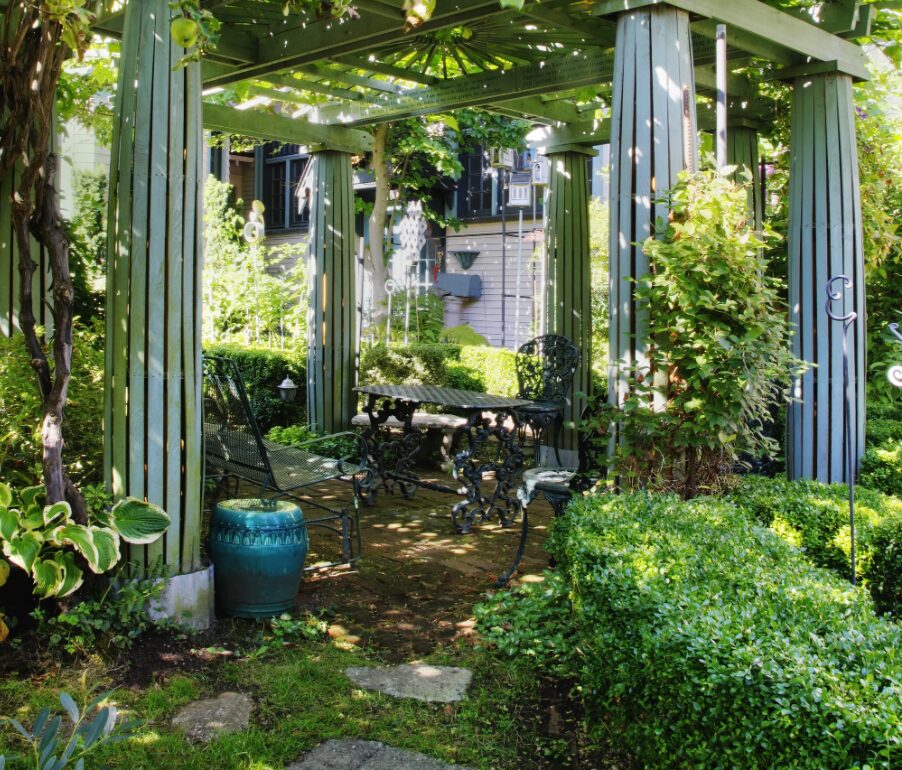
Photo: Mint Images
Call for columns
This secret garden pergola provides a getaway in this outdoor space, with distinctively ribbed columns supporting a thriving ecosystem of climbing plants that make this an almost fully covered patio space.

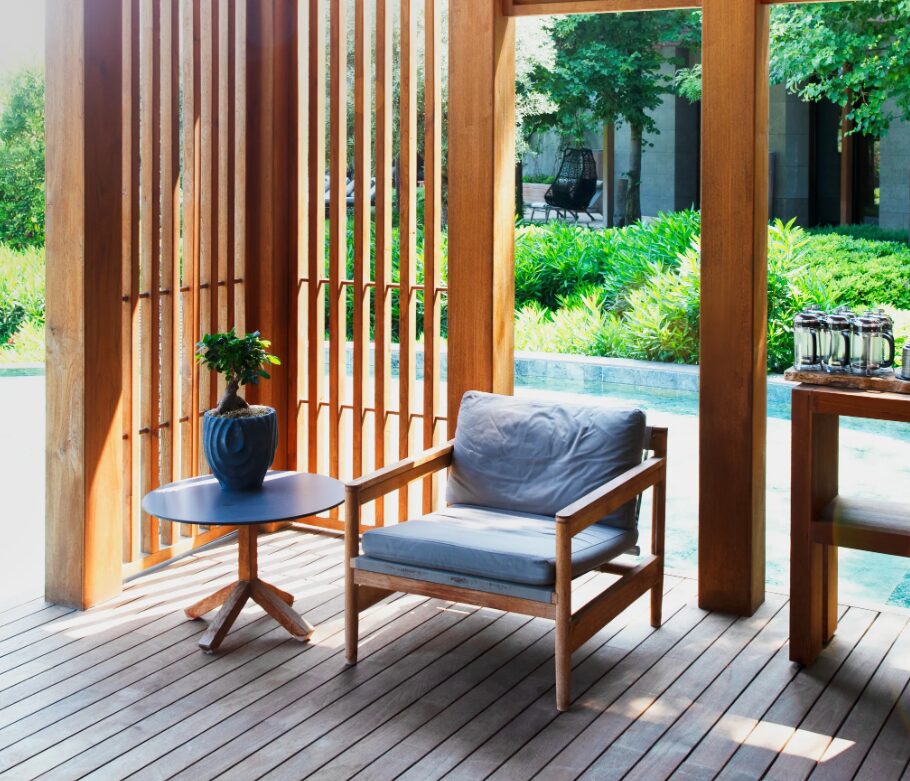
Photo: OmerSedatYenidogan
Style it like a shrine
Evoking traditional Japanese latticework cedar panels this both in the walls and pergola ceiling, this patio design nestled in backyard greenery offers a seemingly floating oasis of serenity above the rippling sounds of a pool.

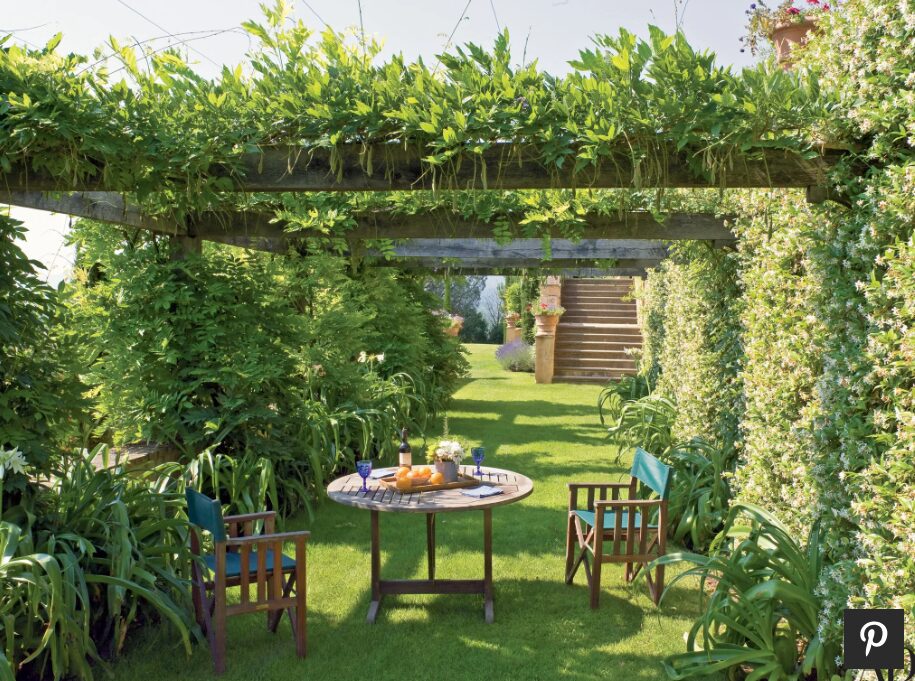
Photo: Giancarlo Garden
Live la dolce vita
If you think of a pergola as an extension of your garden, you don’t need to settle for surrounding your patio pergola with hanging baskets and potted plants. Instead, you could take a cue from Villa Palagio, Sting and Trudie Styler’s farm in Tuscany decorated by Arabella Lennox-Boyd. Adding climbing plants, like Chinese wisteria, turned this 118-foot-long oak pergola into a cloister dedicated to Mother Nature.

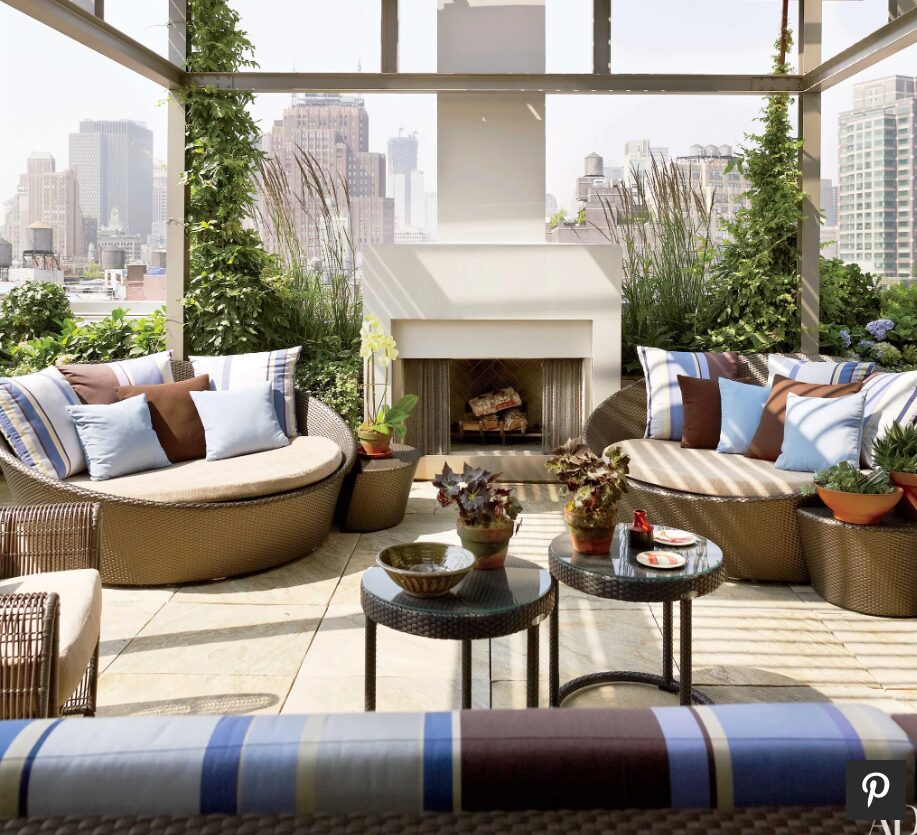
Photo: Pieter Estersohn
Take in the city views
Incorporating trellises with climbing plants, this urban rooftop pergola not only provides shades, it provides privacy—a rarity in the city. Architect Edward Siegel of Cooper, Robertson & Partners created the trellis and fireplace for the rooftop terrace of a Manhattan apartment that he renovated with decorator Ernest de la Torre. The slate paving is from Stone Source, the daybeds and glass-top tables are by Dedon, and the pillows are made of Sunbrella by Les Toiles du Soleil and Janus et Cie fabrics. The plantings are by Miguel Pons Landscaping and Matthias Kirwald Landscaping.

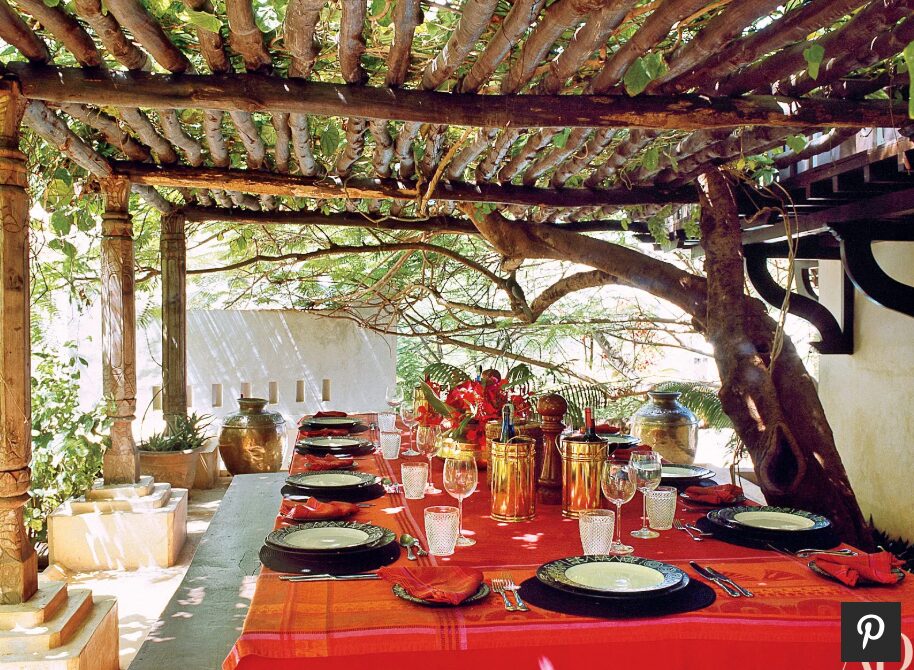
Photo: Tim Beddow
Add international flair
You could add umbrellas to the pool area, but why not shade the space with a rustic pergola? The poolside pergola gives a Mediterranean feel to a home on the Kenyan island of Lamu decorated by E. Claudio Modola.

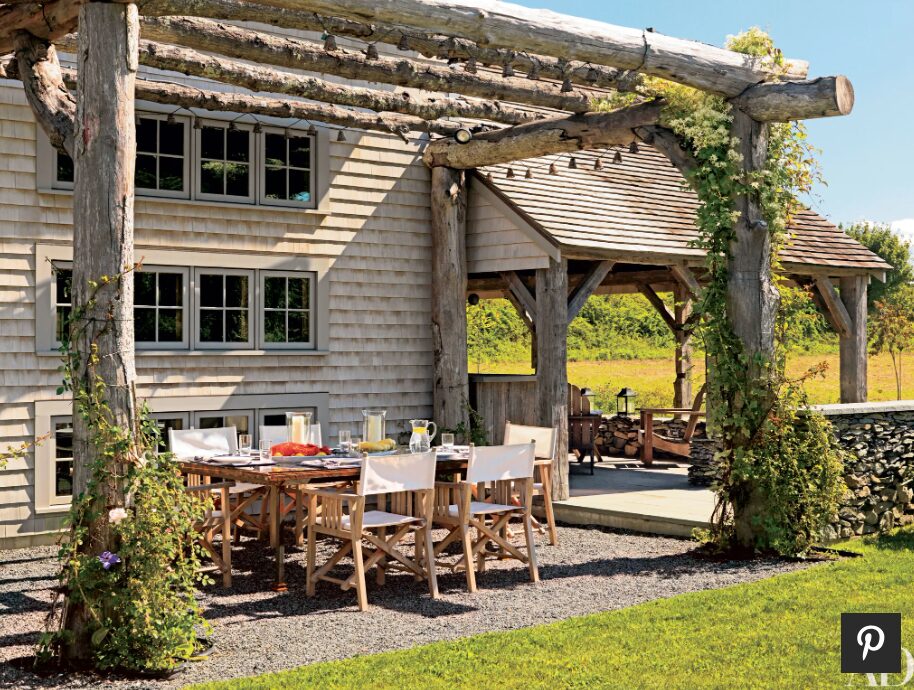
Photo: Richard Mandelkorn
Go for classic New England style
Reclaimed or unrefined materials can make an arbor feel like it’s always been there. Ellen Denisevich-Grickis’s Rhode Island summer home includes a vast wildflower meadow preceding the 3,000-square-foot residence’s entrance. A log arbor spans nearly the width of the shingled rear façade, providing shelter for an outdoor dining room that’s framed by climbing plants.

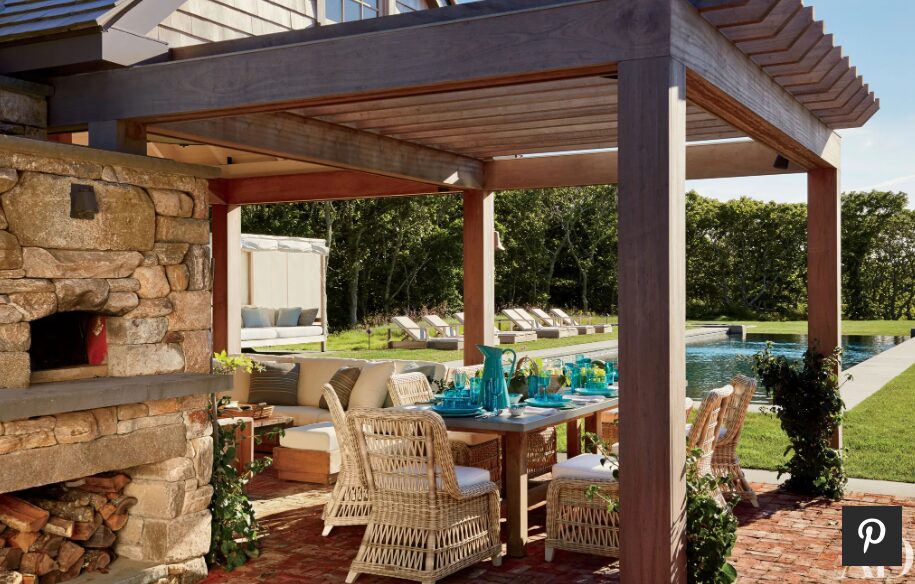
Photo: Oberto Gili
Live outdoors
A pergola can help ensure an outdoor living space or outdoor kitchen has all the comforts of the indoors, from sofas to fireplaces. Under the terrace pergola of a Martha’s Vineyard home by Mark Cunningham of Mark Cunningham Inc., an AD Pro member, a zinc-top reclaimed-oak table stands next to a woodburning oven.
AD –