
Looking to bask in your deck space year round?
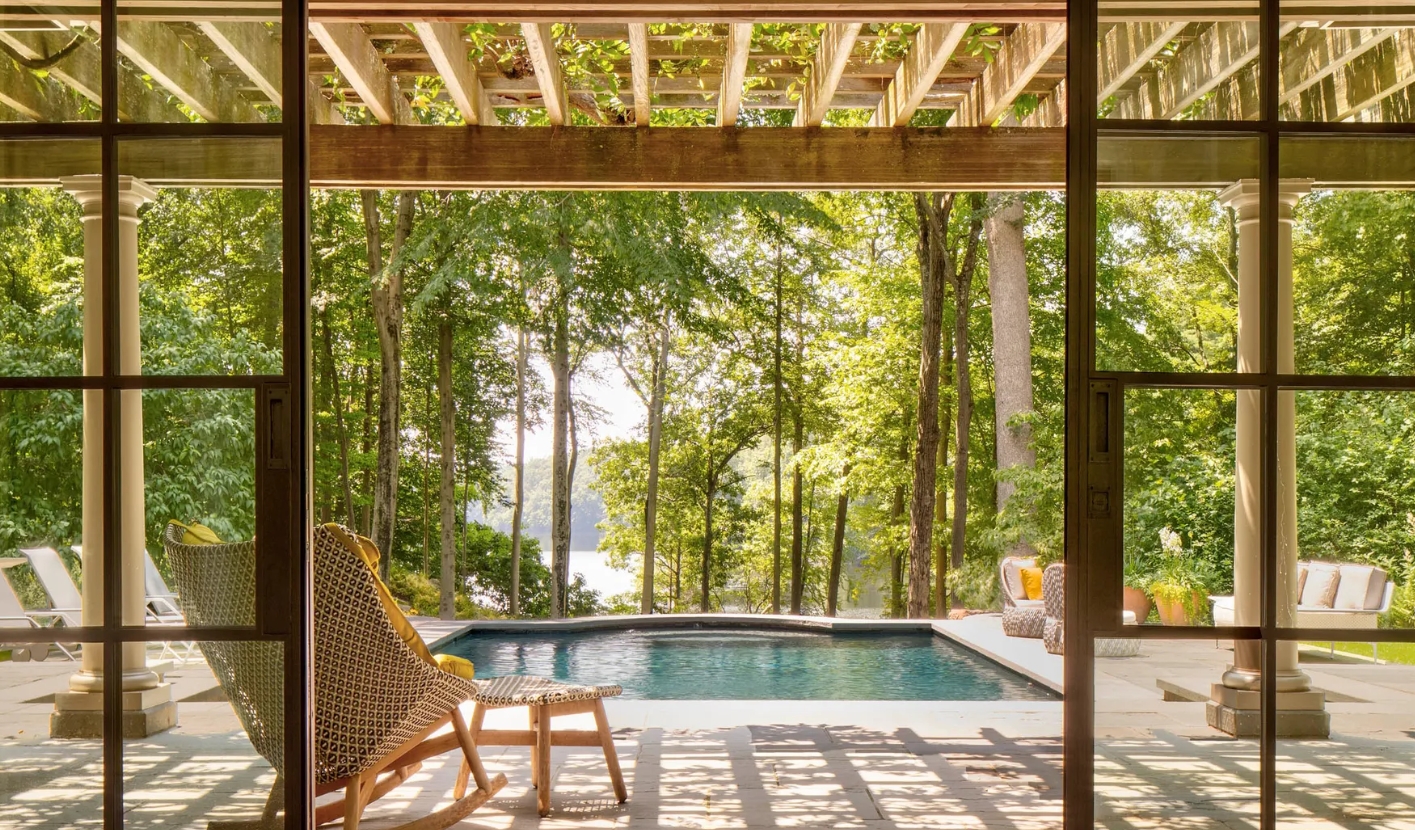
A dreamy patio setup expands the functional footprint of your house by making an area akin to an outdoor living room. Work the appropriate patio cover ideas into your design scheme and that alfresco space becomes a weather-resistant oasis. “Shade covers can provide protection from the hot afternoon sun or visually divide a patio into ‘rooms,’ but keep in mind that they may affect how you plan for patio size,” explains Annie Thornton, outdoor design expert at Houzz. For those working with tighter patio spaces, options like movable umbrellas don’t take up much floor space compared to the shade they provide. “If you’d like to add a pergola or mounts for shade sails, you may need to budget more patio space to accommodate the posts or expand the shade structure’s size,” Thornton says.
Whether you’re aiming to spend quiet time in the shade or entertain family and friends with an outdoor dining oasis in a covered seating area, enjoy the beauty of your backyard from the comfort of your sheltered deck with this guide to patio cover ideas, complete with advice from experts on how to fashion the setup of your dreams.
What can I use to cover up my patio?
ls you can use to cover your patio, ranging from airier, more organic options such as outdoor fabrics, shade sails, and wood pergolas all the way to the more heavy-duty choices like aluminum and steel structures. You can also opt for awnings, canopies, retractable covers, or cabanas. “Retractable awnings, big market umbrellas, built-in pergolas, wrought-iron patio covers, and any variety of shade structures are available and they are improving year over year,” says Los Angeles–based landscape designer Andrea Scharff. “Patio covers also provide structure for fragrant vines that add a layer of beauty,” Scharff explains, noting that wisteria, roses, jasmine, and stephanotis are among her favorites.
1. Add a pergola with interesting lighting
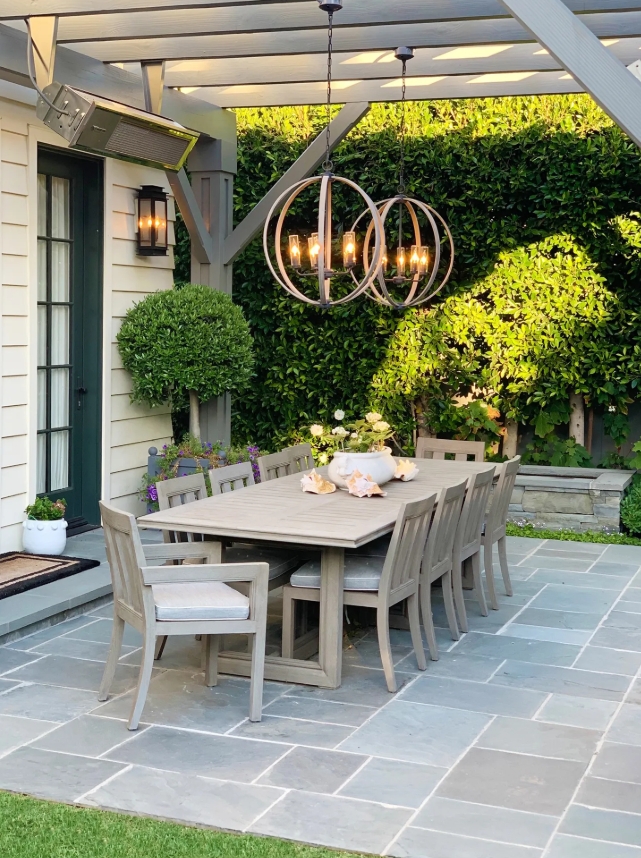
Spherical lights hung from a pergola add a sense of dimension to this outdoor patio designed by Andrea Scharff. Photo: Andrea Scharff
“What’s wonderful about patio covers is that they allow for shade during the day and provide structure for gas or electric heaters to be affixed to in order to keep cool evenings toasty,” says Scharff. As demonstrated by this space she designed, pergolas also create the opportunity to hang pendant lighting. Annapolis, Maryland, architect Cathy Purple Cherry approaches lighting on a covered patio by asking: Do you need to have the ability to read at night? She employs two approaches to outdoor lighting. One strategy is for decor and ambiance—think chandeliers and wall sconces. The second is for true task lighting, like recessed cans in a built-in patio cover. Whichever option you choose, it should be switched separately and dimmable, Purple Cherry advises. “I would select a decorative fixture because of the ways it casts shadows and refracts light on space, creating interest,” she adds.
2. Festoon with outdoor fabric
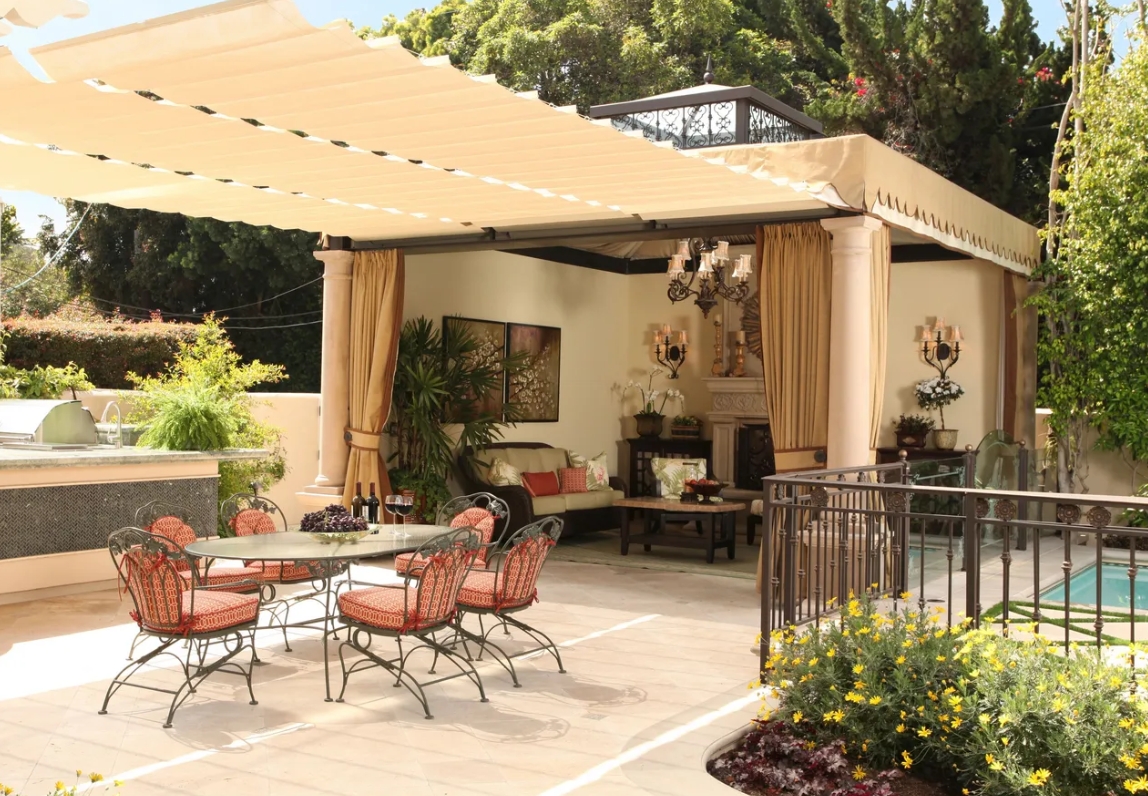
This poolside space designed by Christopher Grubb of Arch-Interiors Design Group feels all the more intimate thanks to the addition of a fabric cover that shades the dining area. Photo: Greg Weiner
Depending on your yard, the idea of a pergola over your patio might feel structurally heavy. Christopher Grubb, an interior designer and founder of Beverly Hills’s Arch-Interiors Design Group, says the option can still work, especially when tented in an airy outdoor fabric.“Outdoor fabric over the top softens it, tieback drapery with an extra detail-like edge banding gives it an extra element of interest,” he explains. “And rather than looking up at a solid fabric covering, consider sheer-pleated exterior fabric.”
3. Create a sunken living room
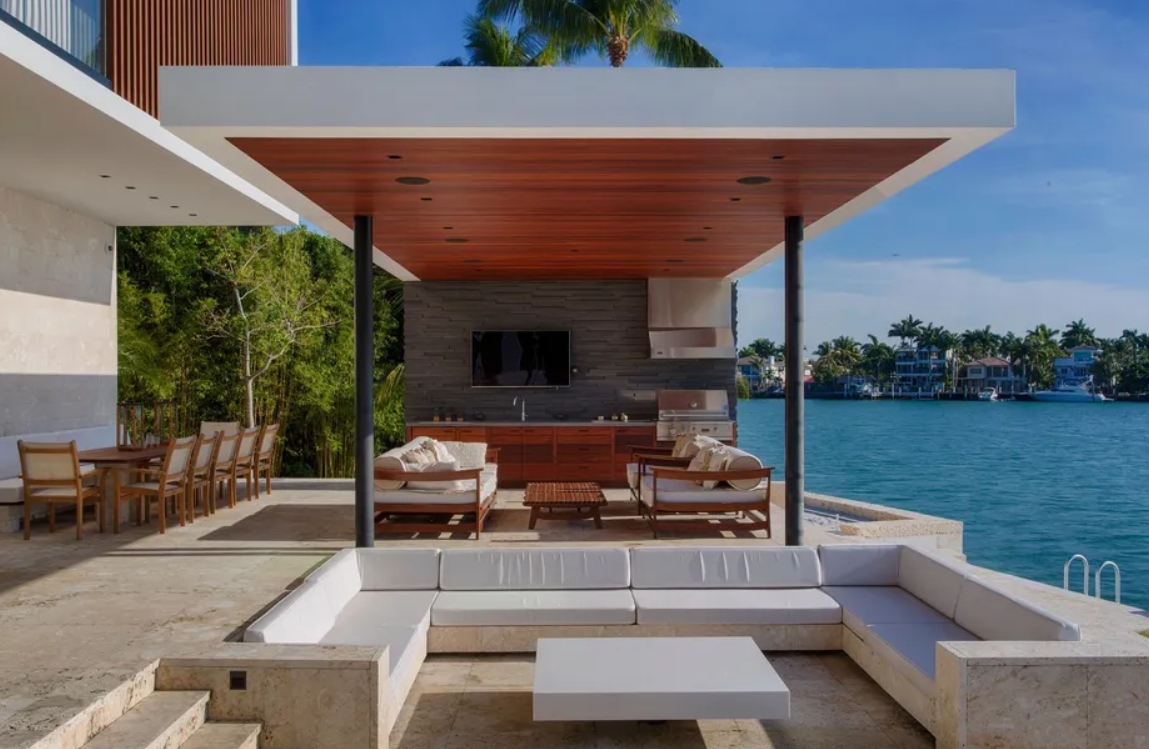
A Choeff Levy Fischman Architecture + Design waterfront patio with an outdoor sunken living room offers quite a view and a space to chill. Photo: Courtesy of Choeff Levy Fischman
4. Build a multilevel patio
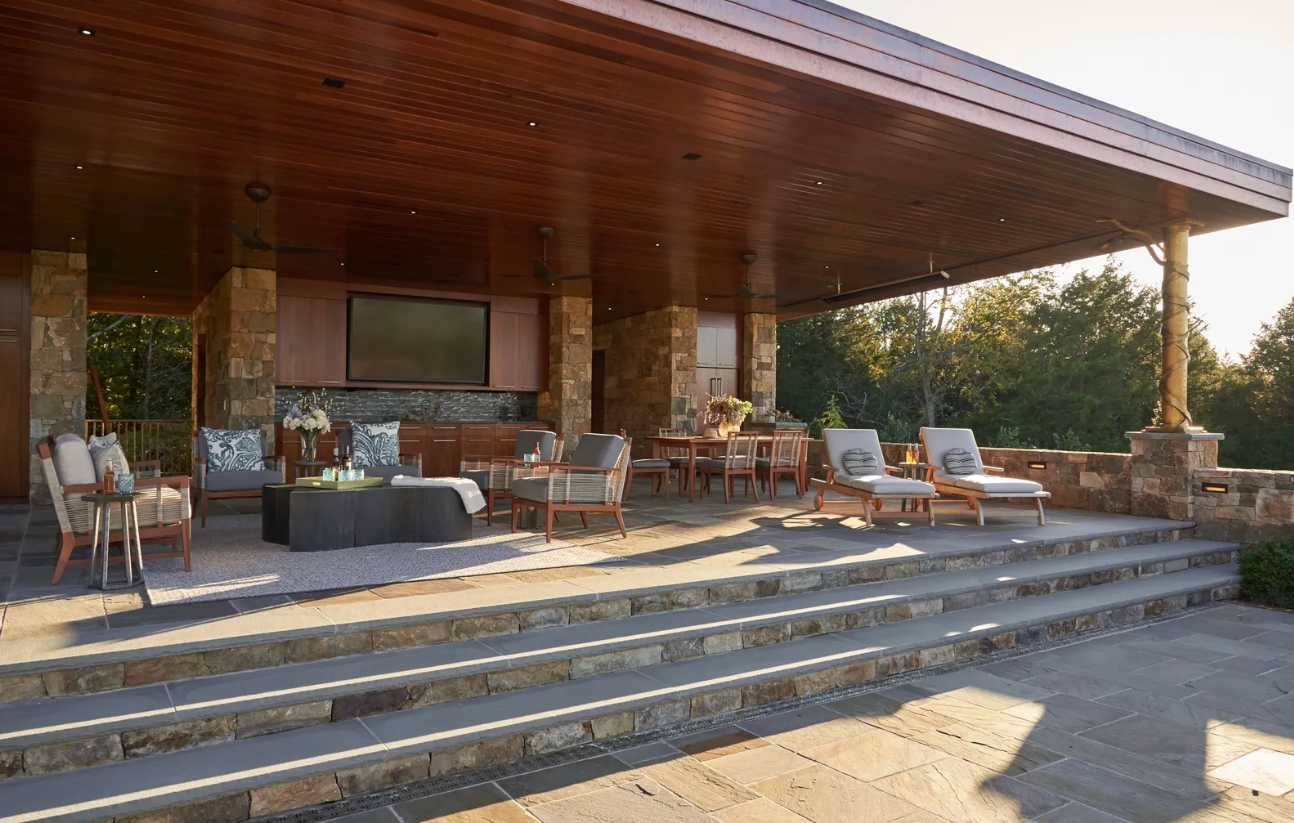
A patio area is all the more impressive when made multilevel, as this Cathy Purple Cherry space exemplifies. Photo: Darren Setlow
“The fantastic thing about elevating a patio is that the steps themselves become furniture,” Purple Cherry says. In addition, putting a patio on a pedestal (quite literally) allows the view to be elevated as guest take in the adjacent pool [not shown]. Just make sure that the patio is deep enough to support all the furnishings for optimal effect.
5. Create the ultimate outdoor entertaining space
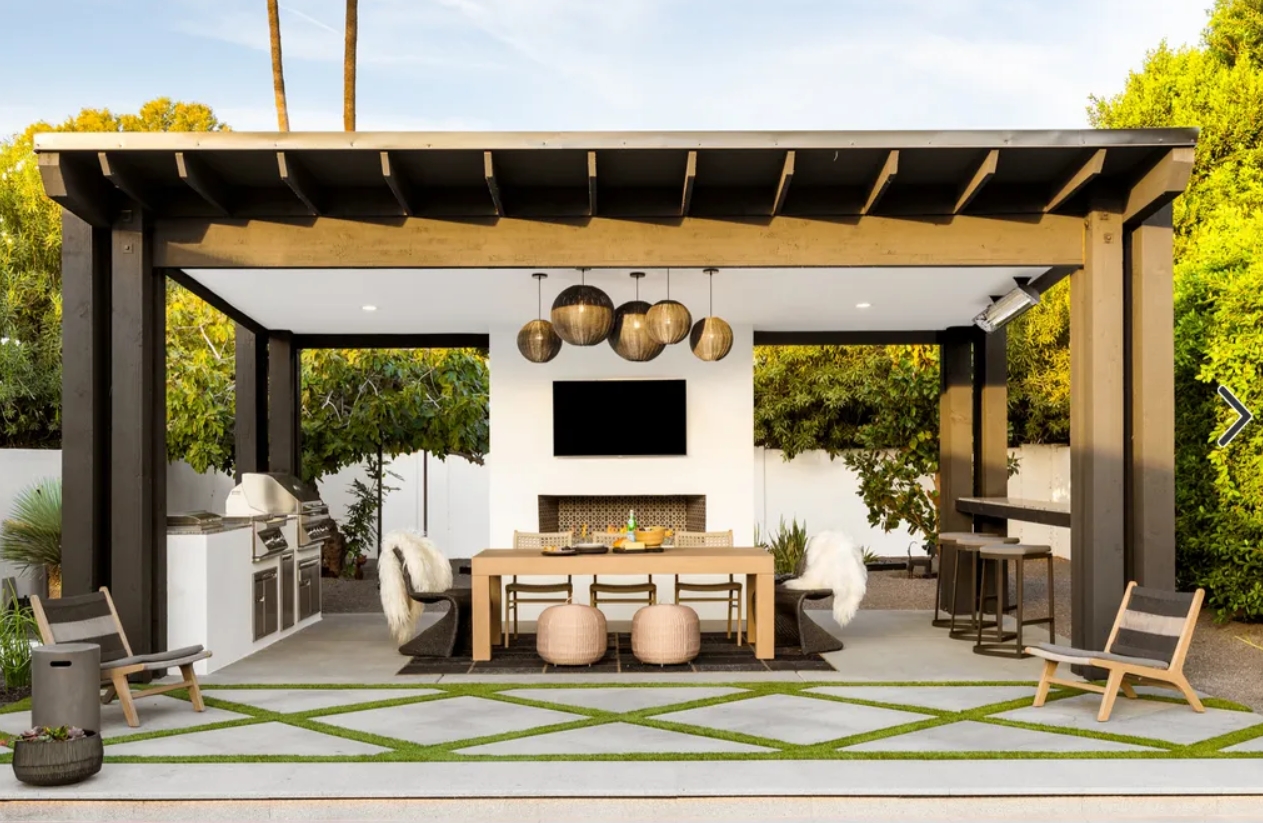
Wood posts and beams were used to create this all-encompassing outdoor living area. Photo: Courtesy of Collective Design + Build
“The interior ceiling was finished off with drywall to give the entire space that outdoor-room feel,” says Kami Schaffner, principal designer and GC at Collective Design + Build. She explains that wicker pendants were chosen to accent the dining table and provide some ambient lighting to the backyard patio space. “The client also wanted to be able to use the space to barbecue and cook for their guests, so we added a grill, a griddle, and a panini press.” Schaffner also provided additional bar top seating on the right side of the space. “The center focal point in the outdoor area is the fireplace that has the interior lined with a firesafe painted tile.”
6. Use a motorized pergola
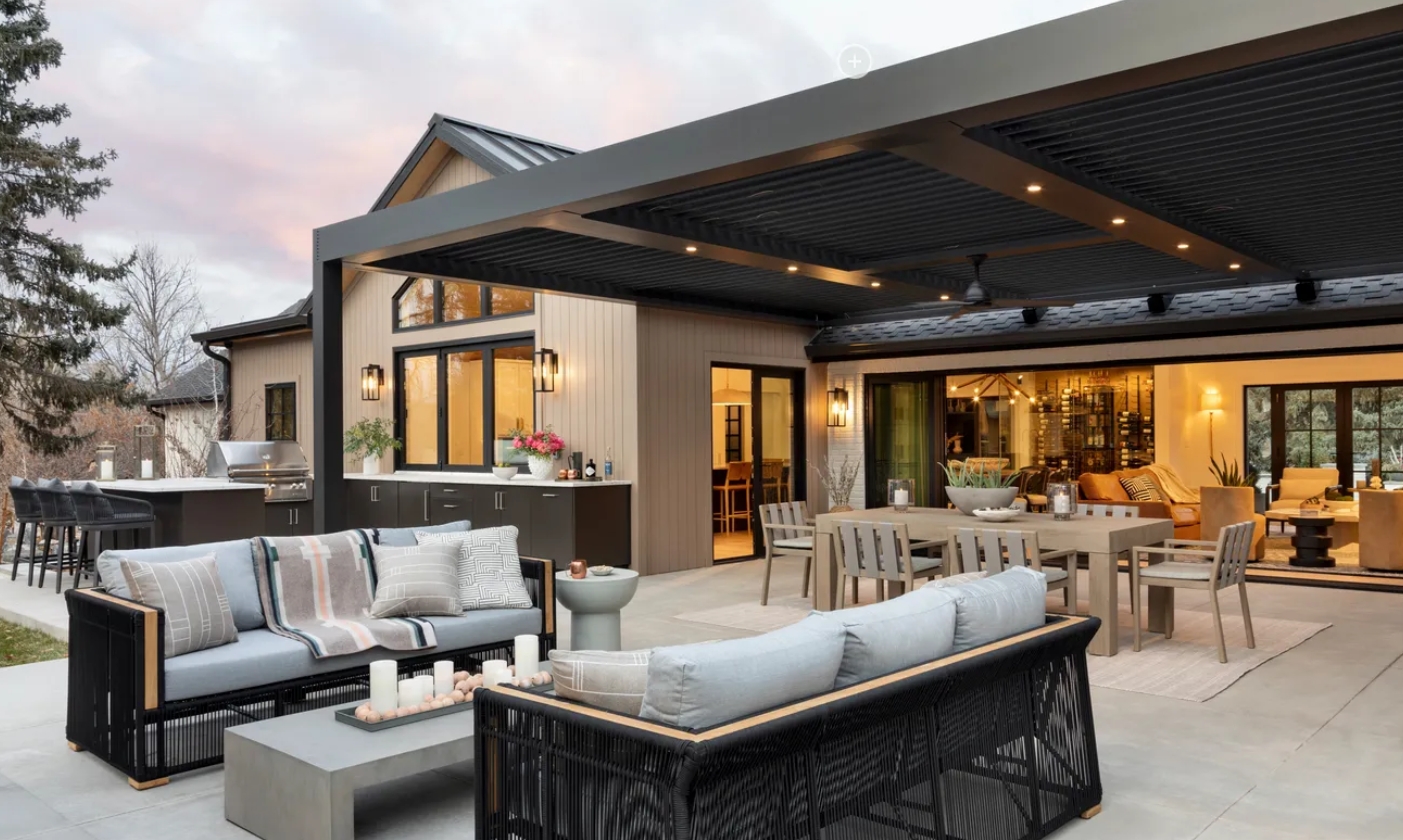
A motorized pergola is easy to operate and provides flexibility. Photo: KGA Studio Architects
“This space features a large motorized louvered pergola to cover a portion of [it], which essentially turned this part of the patio into an outdoor room,” says Paul Mahony, senior partner at KGA Studio Architects. It’s a great solution for homeowners looking for a little flexibility in their patio arrangements; Mahony explains that this type of pergola is a versatile option that allows homeowners to bathe in the morning sun while still offering protection from the afternoon rain showers typical of spots like Colorado. “Opening the slats allows you to enjoy the sun, and with the push of a button the slats close to create a waterproof cover for your patio.”
7. Incorporate anodized aluminum
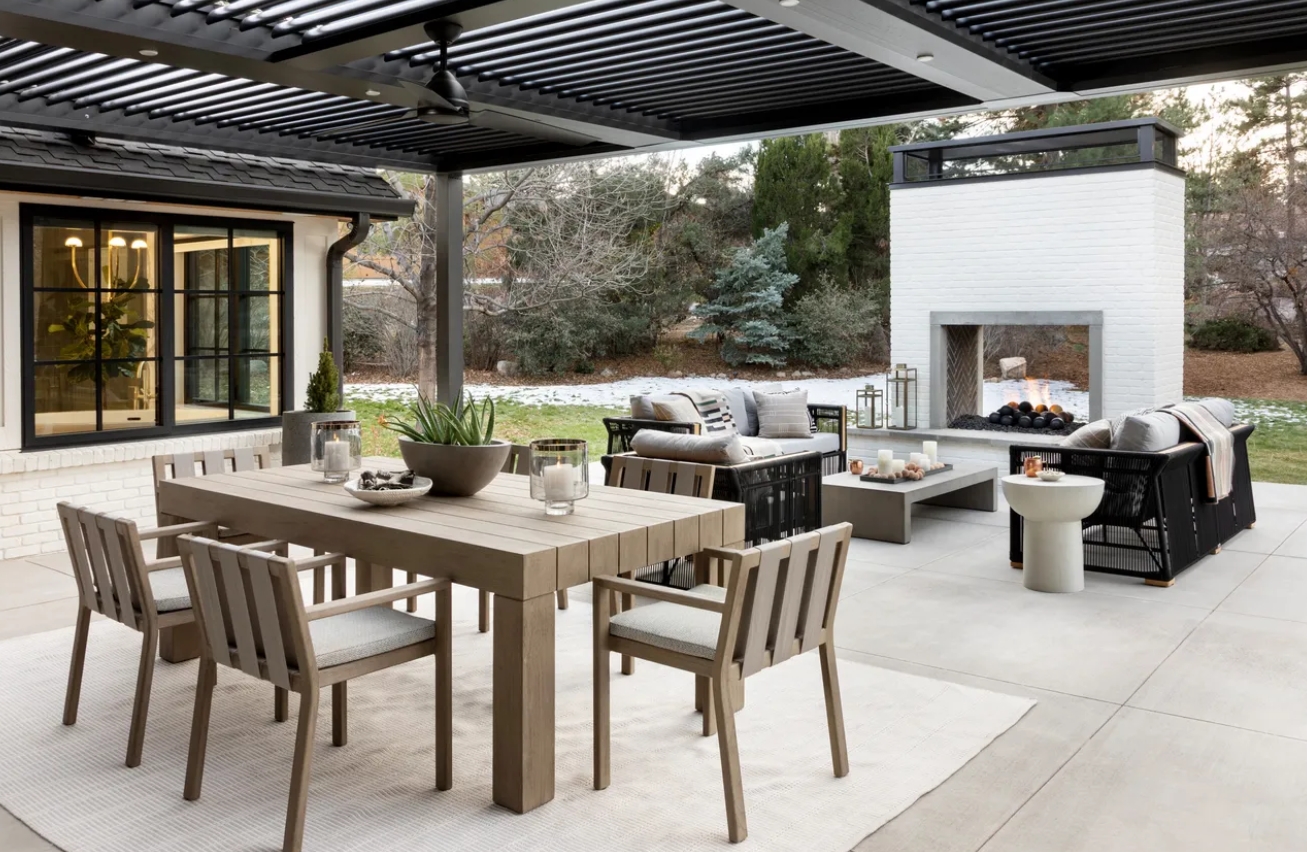
An anodized aluminum pergola enhances architectural details and also provides a clean, contemporary feel. Photo: KGA Studio Architects
A patio cover setup is best when it doesn’t create too much more work for you. “They’re made of anodized aluminum, so they’re essentially maintenance-free,” Mahony adds, explaining that there’s an option to add lighting and a fan, and the drainage is integrated into the system. “We worked with the manufacturer to customize the size and leg options to integrate into the home’s existing design for a solution that is autonomous yet integrated.” Mahony also notes that a multifunctional pergola can double the gathering space while also subtly enhancing the architectural details of the space, offering a contemporary feel.
8. Provide year-round entertaining
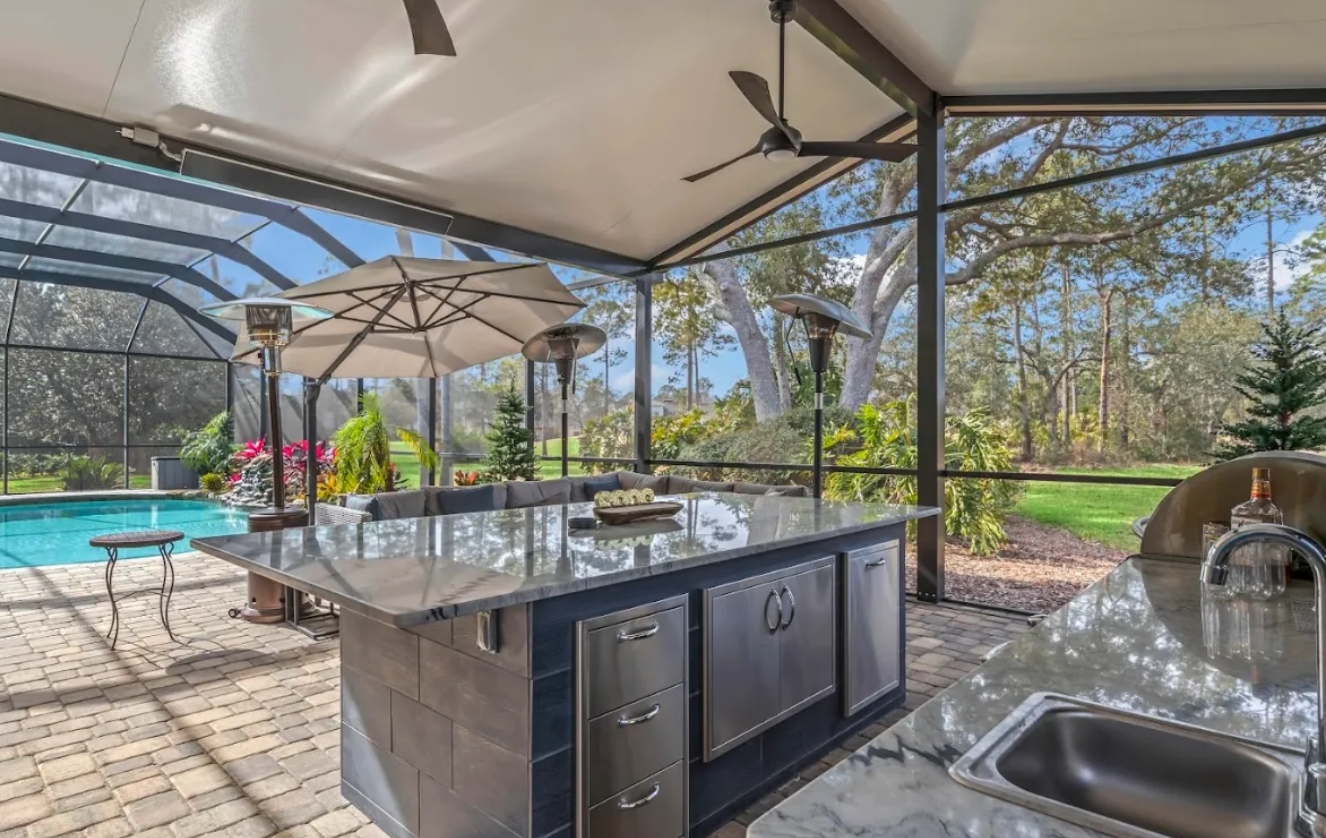
A screen porch can help to keep insects out of the entertaining space. Photo: Courtesy of Coastal Luxury Outdoors
In this luxe project, Friedman says the paver patio serves to unite the distinct areas. The canopy has a lightweight aluminum frame. “This space provides a good transition from indoor to outdoor and is usable essentially year-round.” He also notes that the screen porch keeps bugs out and cuts down on heat from the sun. In addition, the heaters make it comfortable even on cool days, and the ceiling fan provides needed air circulation.
9. Reconsider entrances
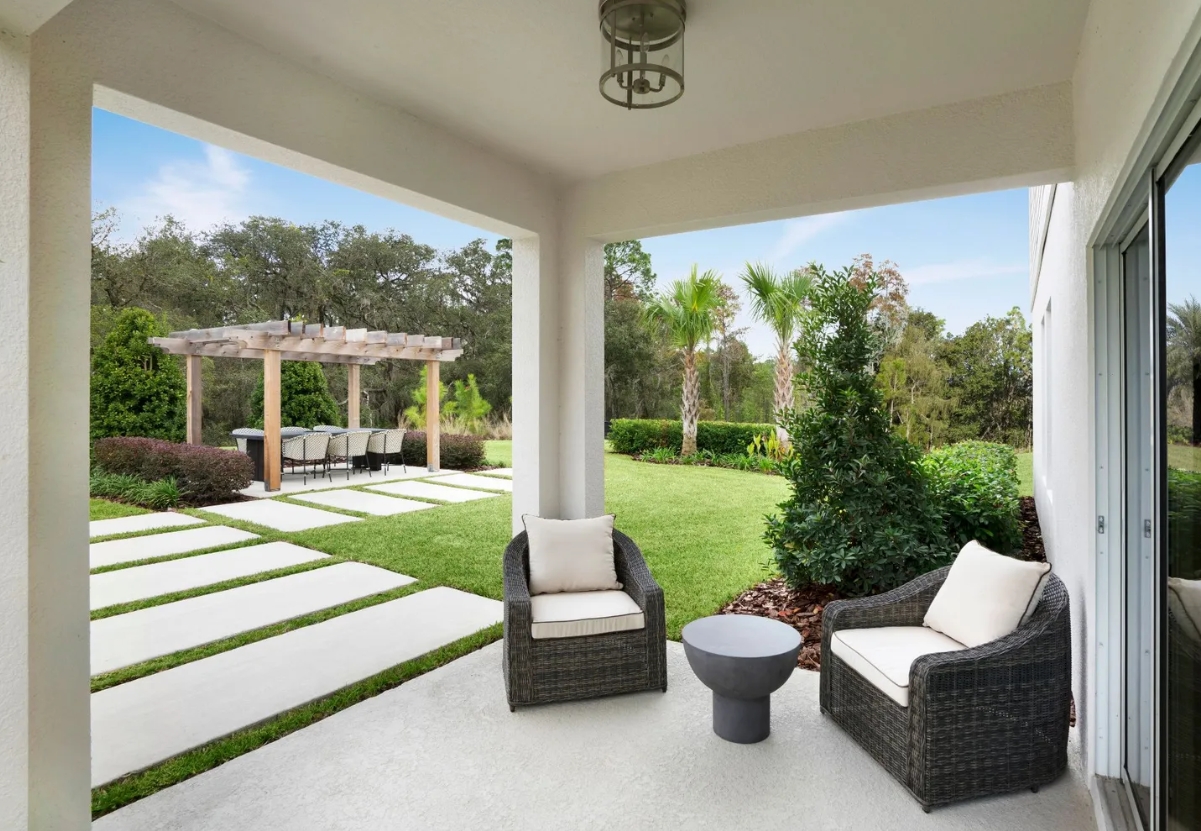
Covered spaces can have a variety of entrance door options, and can be located on the side of the home as well. Photo: Courtesy of Ashton Woods
While traditionally located at the rear of a home, Jay Kallos, SVP of architecture for Ashton Woods, explains that these covered spaces are equally useful for accessing a side yard, making for unexpectedly intimate vignettes. According to Kallos, covered porches have become pivotal in the backyard design renaissance, seamlessly blending interior living spaces with the open air. “Sliding glass and accordion doors all but disappear, merging the comforts of home with the calm of your backyard.”
10. Use nature as a backdrop
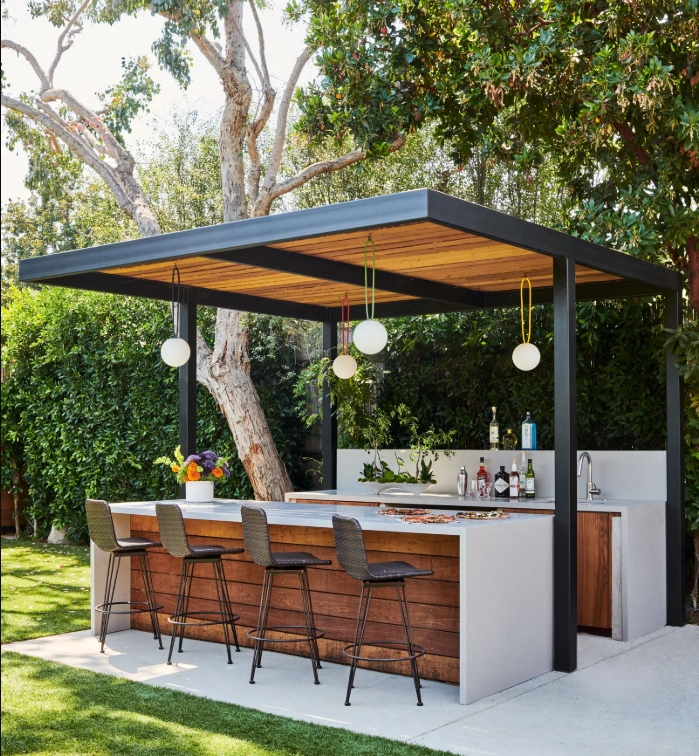
This patio cover design creates an outdoor oasis. Photo: Lauren Pressey
In this clean and minimalist design, Venice, California–based designer Kim Gordon creates an oasis against a verdant backdrop of trees and grass. She uses a palette with organic tones and materials to make it both an extension of its natural surroundings and an inviting space to relax. The hanging lights—which introduce a few subtle pops of color—make the space open for use day or night.
11. Bring nature in with lattices
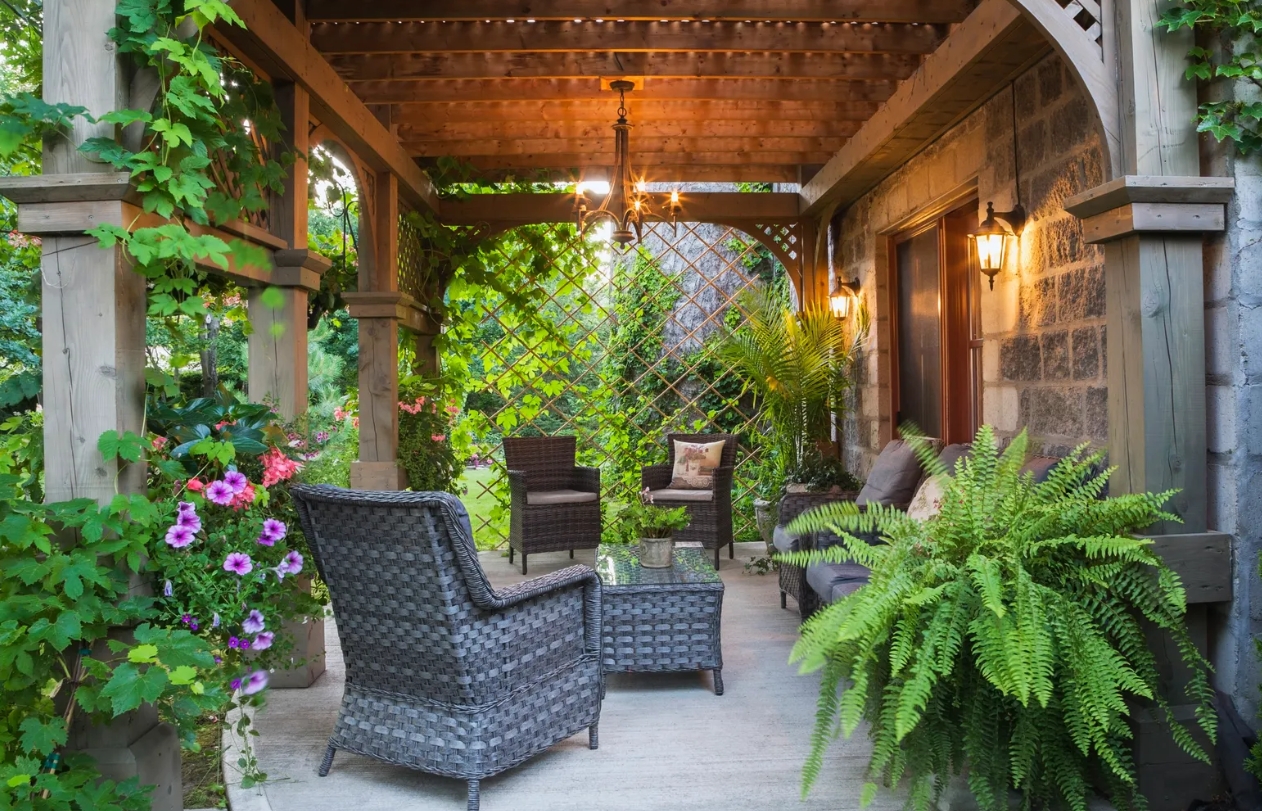
A lattice decorated with climbing vines and purple petunias adds a bit of greenery to this castle-style concrete patio. Photo: Perry Mastrovito
You can enhance traditional exterior surfaces and adorn the patio as you would any other room in the home, says Paige Foss, architecture designer at Drees Homes in Fort Mitchell, Kentucky. For a simple DIY project, add lattice with greenery to further blur the line between interior and exterior.
12. Create a focal point
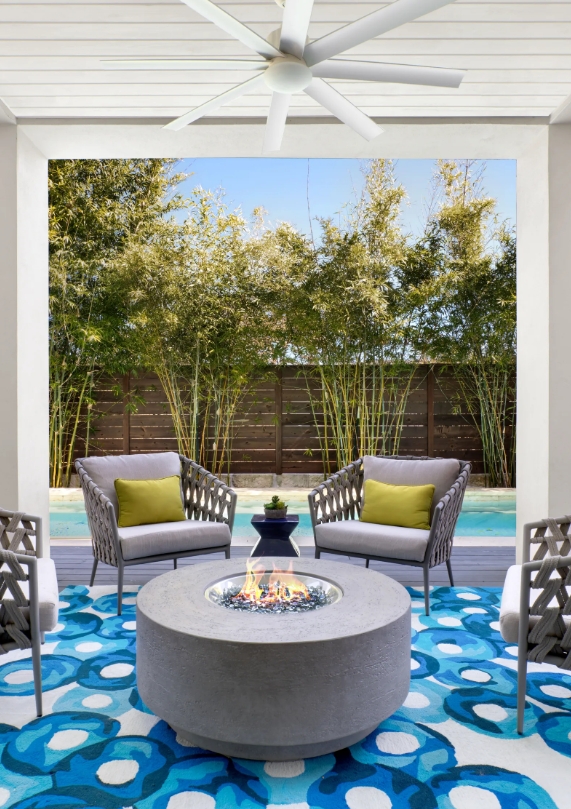
Etch Design Group knows that a firepit is one way to draw attention to an outdoor patio. Photo: Cate Black
“It’s a good idea to create a focal point in covered patio spaces,” McKay recommends. “Often a firepit for a casual space, or a fireplace for a more formal space, will do the trick nicely.” To give the patio space even more purpose, tie in interior design elements like a vibrant rug that echoes the focal point, as seen in this project by Stephanie Lindsey, principal interior designer for Etch Design Group in Austin.
13. Go for a domed ceiling
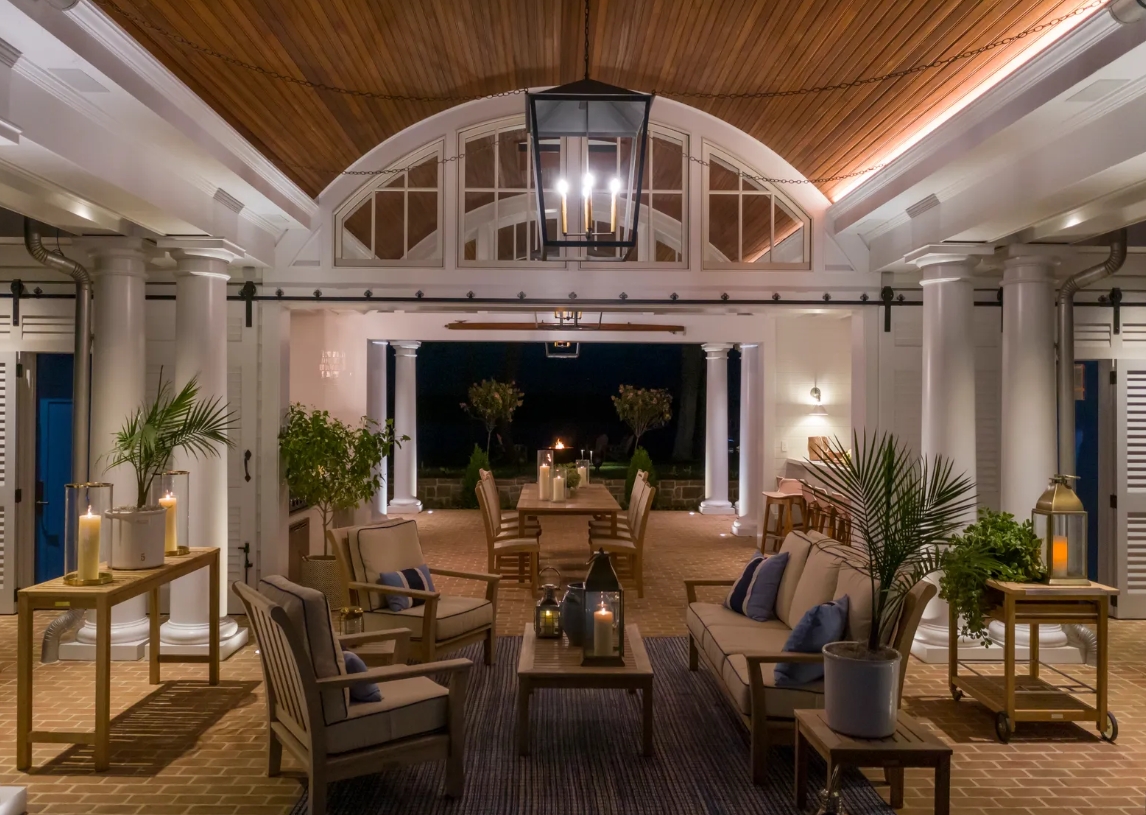
The arch on the Cathy Purple Cherry patio ceiling adds flair and a sense of personality. Photo: Durston Saylor
14. Bring in classical elements
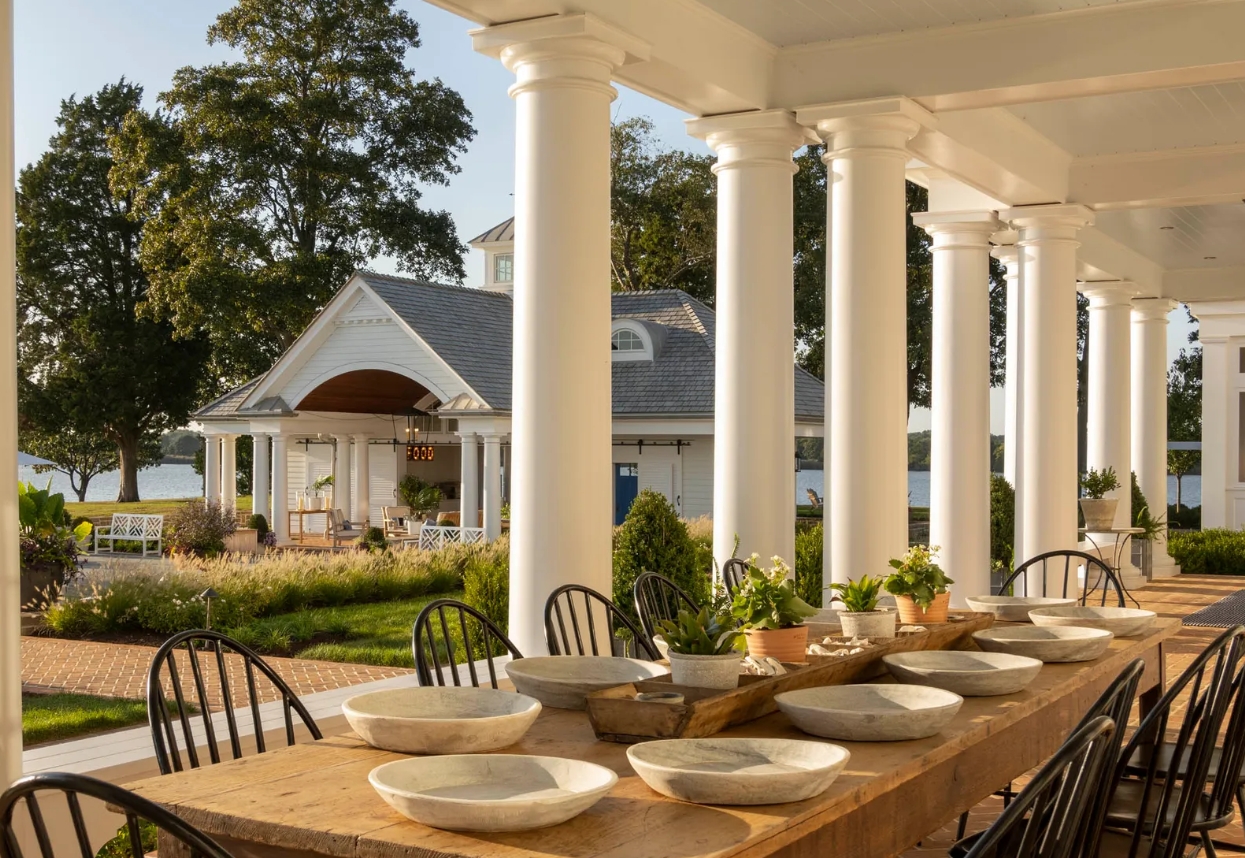
Architect Cathy Purple Cherry embraced classical columns to give this patio a regal yet inviting vibe. Photo: Durston Saylor
Play up the home’s architecture when decorating an outdoor patio. If the house already has traditional elements like columns, use the design element as a backdrop. Adding a long table not only creates a dining area that’s available rain or shine, it gives a nod to a Mediterranean lifestyle.
Architectural Digest – and