

These natural wonders offer a reminder that the world’s greatest beauty often survives precisely because it has been overlooked.
The planet’s most powerful landscapes rarely announce themselves with trumpet blasts and celeb-drenched opening ceremonies. They are places shaped slowly, by water, wind, and ice, and are best understood through patience rather than spectacle. Away from the obvious icons lie natural wonders where ecology, history, and culture remain tightly interwoven, and where human presence has often been defined by restraint rather than conquest.
This Earth Day, here are seven favorites from all across the natural wonders of the world. In an age of accelerating change, they offer a reminder that the world’s deepest beauty often survives precisely because it has been overlooked.
Altai Mountains CINETOPIA/Getty Images
Altai Mountains, Mongolia
Hunting with eagles on horseback is a tradition found in a region of Mongolia that cleaves close to Russia, China, and Kazakhstan. This is the Altai Mountains, an untamed, unforgiving unfolding of vast, high-altitude wilderness rich in glacial peaks, open steppe, and river-carved valleys. Snow leopards prowl remote ridge lines while the eagle hunters maintain a centuries-old bond with golden eagles below.
Once traversed by Genghis Khan, this is a focal point of Scythian-Turkic culture, whose arid slopes somehow sustain nomadic life that demands constant attentiveness to the environment. Low-impact trekking and homestays offer rare access to a region where human presence still bends to nature’s terms.
If you’re prepared to go beyond the end of the asphalt ribbon, and you don’t mind the occasional yak or grazing horse as your only company for countless miles around, the Altai delivers the closest thing a modern day traveller might experience to embarking upon the ancient Silk Route, equipped only with a tent and sustained only by mutton dinners and cups of the local salty, buttery tea.
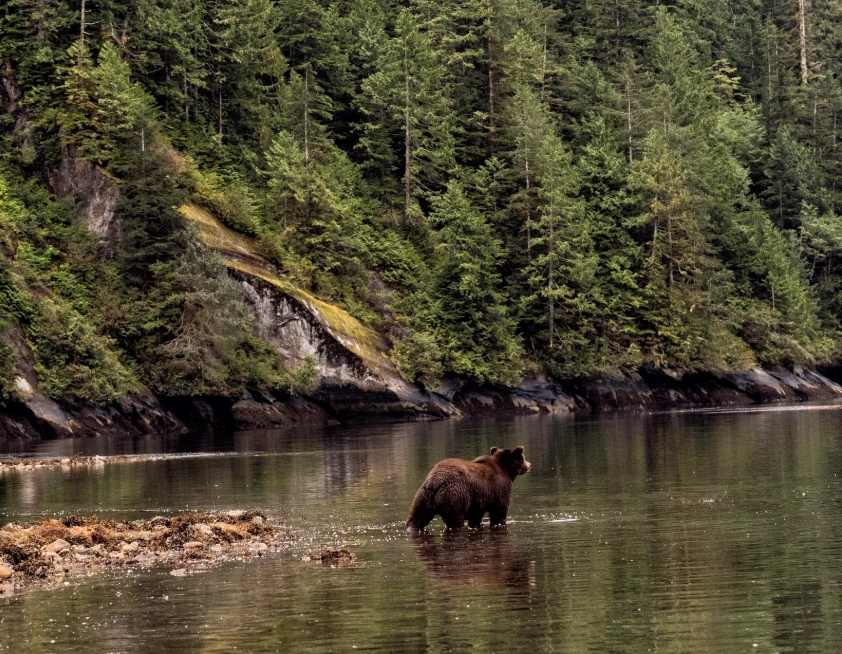
A grizzly bear wades in water at the Great Bear Rainforest. Getty Images
Great Bear Rainforest, Canada
Stretching along British Columbia’s remote Pacific coast, the Great Bear Rainforest is one of the last great temperate ecological wildernesses on earth, encompassing 50,000 square miles of rainforest, fjords, and isolated terrain. Cedar and spruce rise from moss-sodden ground, rivers flash silver with migrating salmon, and the rare spirit bear, a white-furred black bear, moves silently through the undergrowth.
What sets the region apart is not only its ecology, but its governance by the First Nation Sahtuto’ine (meaning Bear Lake People) community. Industrial logging is heavily restricted here, tourism tightly controlled, and ecosystems monitored with long-term thinking. The pinnacle of this conservation work can be seen at Great Bear Lake. Larger than Belgium and straddling the Arctic Circle, it’s the eighth largest lake on earth and the surrounding tundra and boreal forest stands pristine in a wilderness that’s far from postcard scenery, but more a living agreement between land and people.
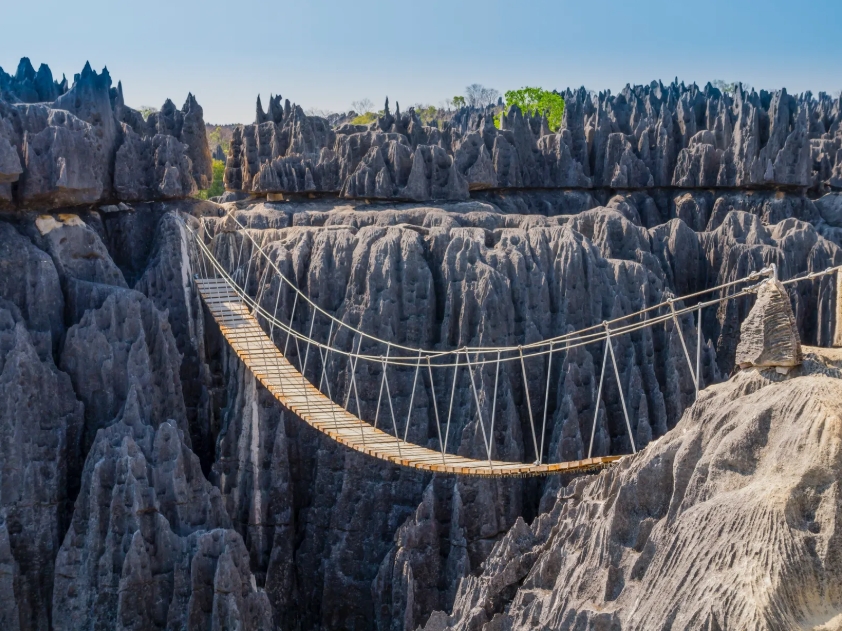
Hanging bridge over Tsingy de Bemaraha National Park, Madagascar Getty Images
Tsingy de Bemaraha, Madagascar
Translated as “the land where one cannot walk barefoot,” the naming of Tsingy de Bemaraha in western Madagascar cannot be accused of exaggeration. Erupting from the earth is a dense thicket of limestone pinnacles so sharp and chaotic they appear forged rather than eroded. Hidden within this stone labyrinth are rare lemurs, birds, and plants found nowhere else on the planet.
Long regarded as sacred by the local Sakalavas communities, the Tsingy remained largely untouched for centuries. Today, carefully designed walkways allow visitors to move through its upper reaches without damaging its fragile ecosystems. For many who lived in this forbidding region, these pinnacles are their resting place. Inside the caves you might see tombs tucked away in recesses, shielded for all time from the daggers of piercing African sunlight.
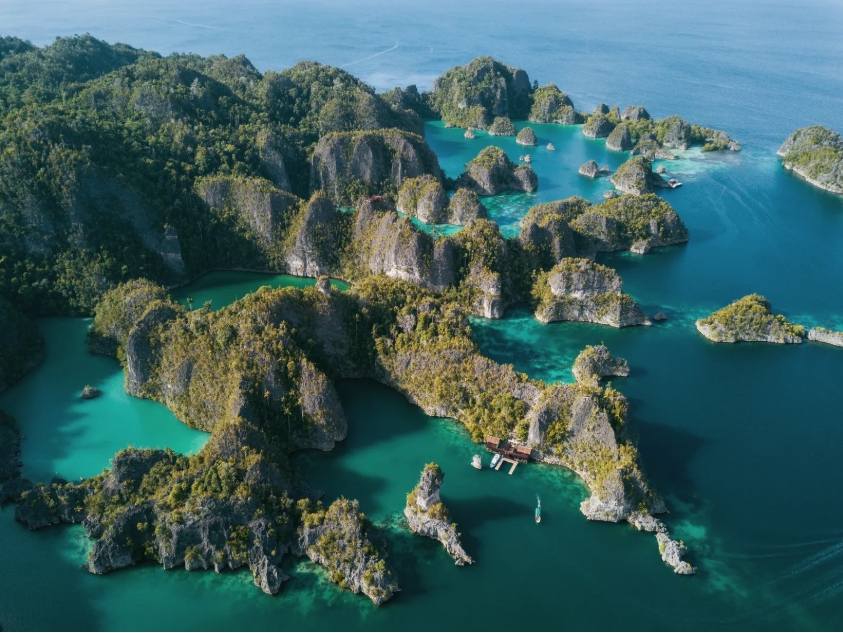
Spectacular rock formations in Raja Ampat, Indonesia Getty Images
Raja Ampat, Indonesia
In the far eastern reaches of the Indonesian archipelago, in the Bird’s Head region of West Papua, Raja Amput isn’t easy to reach, but the onerous amounts of flying and sailing time are immediately forgotten upon a maiden snorkel dip underwater to view the reef. This is a veritable rush hour of angelfish, parrotfish, butterfly fish, and frogfish; all so luminous and exotic in color that the subterranean scene looks like a giant congregation of circus acts.
This is possibly the most biodiverse marine environment on earth, supporting thousands of species. To help keep it this way, local villages have revived traditional sasi practices, seasonal bans on fishing, to allow marine life to remain febrile, while community-run eco-lodges operate on solar power and strict no-waste principles. Raja Ampat’s brilliance lies not just in its underwater beauty, but in the way that, far from the gaze of mass tourism, conservation, and culture are continuing to reinforce one another.
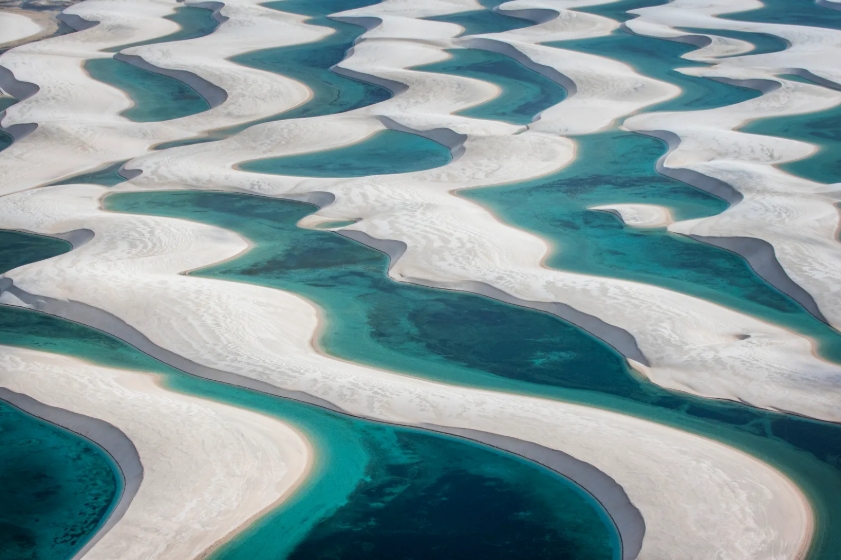
Lençóis Maranhenses, Brazil Getty Images
Lençóis Maranhenses National Park, Brazil
At first glance, Lençóis Maranhenses appears impossibly barren, with its endless white dunes rippling beneath a fierce equatorial sun. Yet each rainy season, freshwater lagoons bloom between the sands, transforming the landscape into a temporary network of turquoise pools.
This is no empty desert. Fishing communities have lived here for generations, adapting their lives to the cycles of flood and drought. Now protected as a national park, Lençóis Maranhenses remains strikingly quiet, except for during those (very) rare moments when the rains come and the lagoons fill up. Exploring the area on horseback is possible, rendering possible an experience where, like a lost Don Quixote, you can experience solitude, adventure, and surreal landscapes that feel both borderless and are utterly bereft of fellow travelers.
Morne Trois Pitons National Park on the Caribbean island of Dominica Aerial Filmworks/Getty Images
Morne Trois Pitons, Dominica
The very last Caribbean island to be colonized by Europe, Dominica has always done things its own way. It has always looked dramatically different to its neighbors, lacking emollient beaches but excelling in Jurassic-looking peaks and dense rainforest. Nowhere is this tiny island’s natural wildness more evident than Morne Trois Pitons National Park, a 17,000 acre UNESCO-protected site. Here, rainforests conceal boiling lakes, fumaroles hiss from the earth, and waterfalls plunge through volcanic gorges.
The island has consciously resisted mass tourism, prioritizing geothermal energy, marine protection, and small-scale eco-lodges instead. To trek in the Pitons is to immerse yourself in an almost Edenic forgotten world of jackfruit trees, waterfalls, and winding trails, where you might spot sperm whales in the deep blue beyond or simply a hand-painted “iguana crossing” sign. Gazing at the volcanic craters and freshwater lakes is an instant remedy to any assumptions that a Caribbean island simply must have a beach.
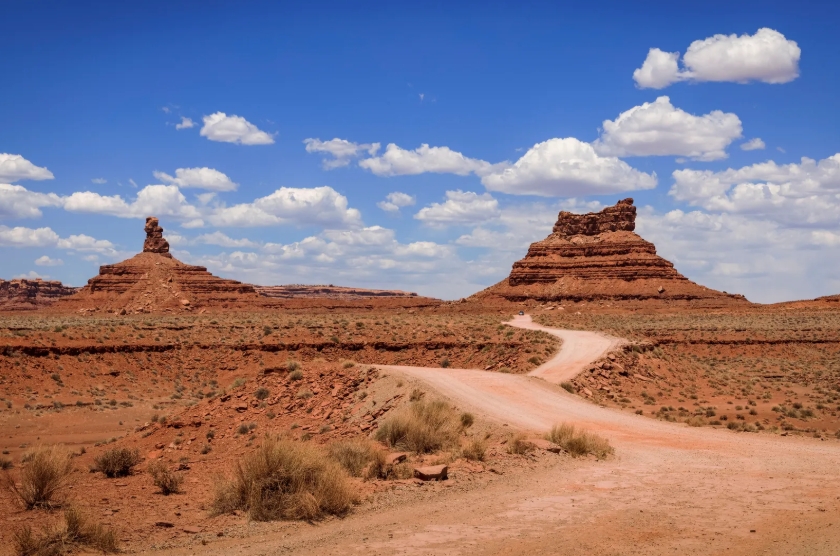
Bears Ears National Monument Getty Images
Bears Ears National Monument, United States
In the high desert of south eastern Utah, Bears Ears rises as a vast cultural and ecological landscape of mesas, canyons, and ancient stone dwellings. This is the ancestral homeland for the Navajo Nation, Hopi Tribe, Ute Indian Tribe, Ute Mountain Ute Tribe, and Pueblo of Zuni and is rich with petroglyphs and medicinal plants which are still gathered today.
Its designation as a national monument by Barack Obama has been threatened by recent attempts to reduce the size of the protected area for mining and gas extraction. As the wrangling continues in Washington, D.C., the landscape remains as it ever was with two looming buttes rising like ears (hence the name), presiding over a vista of Native cliff dwellings and sacred burial grounds.
Conde Nast Traveler by Rob Crossan, April 22, 2026 (This article was originally published on Condé Nast Traveller UK.)