
Why soft edges and rounded, puffy profiles are making a comeback.
David Mitchell
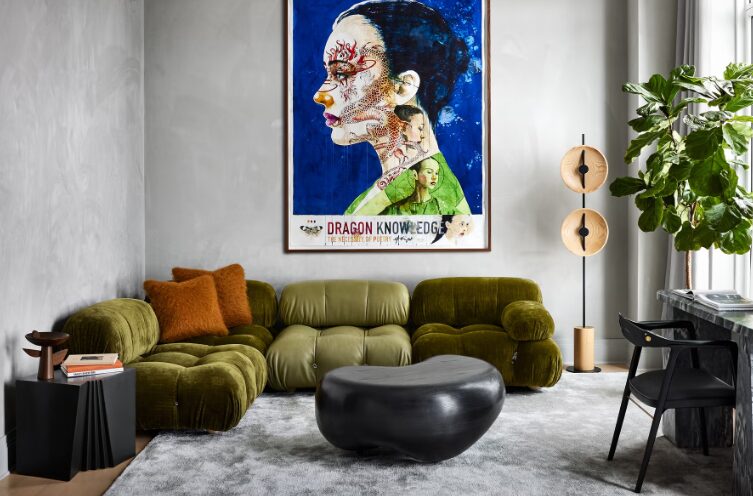
Above: In a living room by Noha Hassan, Mario Bellini’s iconic Camaleonda sofa adds sculptural softness.
For a long time, spare minimalism was the go-to style in interiors: Sleek surfaces, streamlined shapes, and an absence of ornament all contributed to a restrained look that was less about comfort and more about aesthetics. But lately, there’s been a rise in interiors that have a sculptural softness, with pleasantly plump furniture silhouettes making a welcome comeback.
As with many design trends, this style’s recent surge in popularity can be traced back to Italy. In the 1970s, Italian masters such as Mario Bellini, Tobia Scarpa, Gianfranco Frattini, and Alessandro Becchi attracted worldwide attention with their puffy chairs and sofas that bridged the gap between graceful midcentury modernism and the exuberance of Memphis Milano. (Their earlier counterparts in France, most notably Jean Royère, were also dabbling in similarly inflated forms.) Bellini’s modular Camaleonda sofa, with its marshmallow-esque segments and deeply tufted upholstery, was a particular hit.
After falling out of fashion, the style made a viral comeback with creatives and tastemakers like Kelly Wearstler, Chrissy Teigan, Athena Calderone, and Daniel Arsham. By 2020, B&B Italia capitalized on the trend and put the bulbous Camaleonda back into production after more than four decades.
One captivated designer was New York–based talent Noha Hassan. “Curves instinctively feel comforting—they’re inherently more inviting,” she says. “There’s also a sensual undertone to curved forms—they feel fluid and effortless, adding warmth and a quiet sense of movement without overpowering the space.”
Tom Riggs
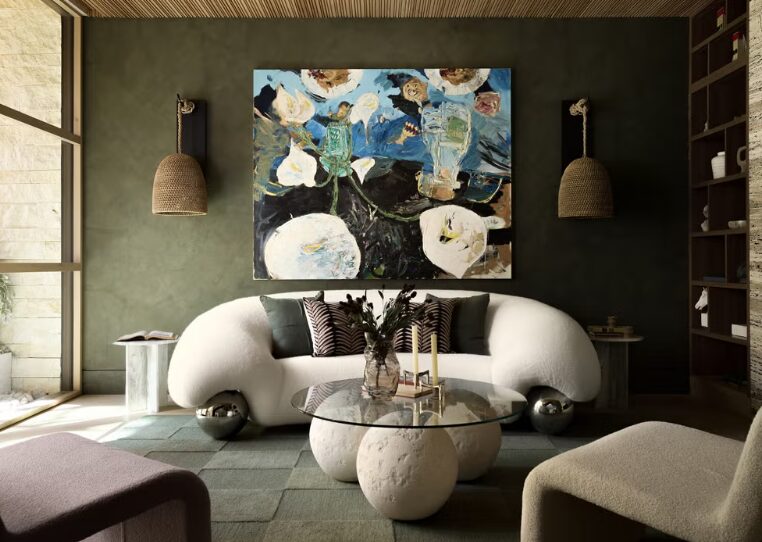
A living room by Francesca Grace features an abundance of rounded silhouettes.
Hassan has used the Camaleonda and other furnishings with soft, rounded profiles in her interiors, tapping into their softness as a way to balance the straight architectural lines that most interiors already have. Together, the pieces conjure a more dynamic and layered mood that feels organic and uplifting.
“We’re in a moment where people crave comfort, tactility, and emotional warmth in their homes,” she says.
But it’s not just seating: Hassan also likes to deploy organic-shaped lighting and tables with fluid, sculpted lines into her interiors. “There’s a growing desire for spaces that feel nurturing yet elevated. Curved furniture answers that beautifully—it brings softness and ease while still feeling thoughtful and timeless,” she says.
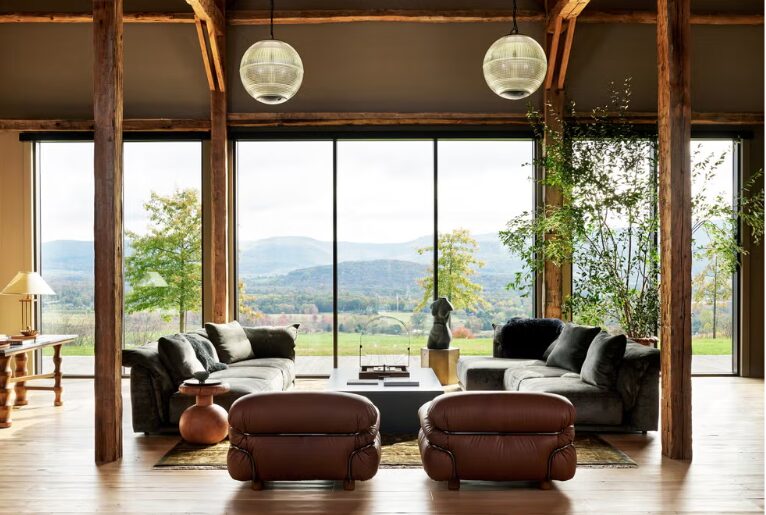
Kelly Marshall
An upstate New York living room by designer Jess Cooney features a pair of Sesann armchairs by Gianfranco Frattini from Il Decor.
The style also resonates with Los Angeles–based interior designer Francesca Grace, whose A-list client roster includes Sabrina Carpenter, Alicia Keys, and Justin Bieber. “After years of very clean, minimal interiors, people are craving warmth and tactility again,” she says.
It’s no coincidence that these shapes not only look good on Instagram feeds—but they resonate in real life too. As Grace notes, “Rounded, plush furniture softens a space visually and physically. It photographs beautifully, but more importantly, it supports how we actually want to live: relaxed, gathered, and connected.”
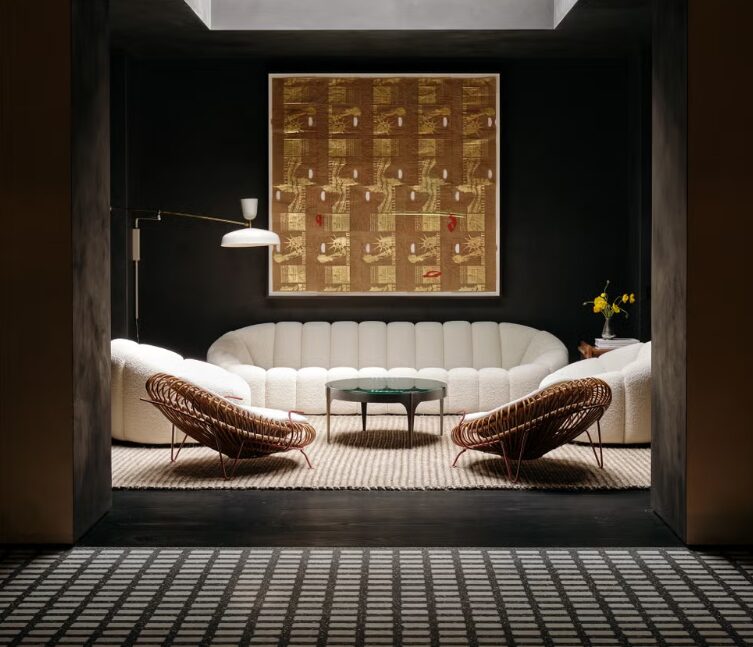
Adrian Gaut
Grace finds that there’s an emotionally disarming quality to pieces that have the organic look. In an increasingly frenetic world, maybe we want our homes to be free of sharp corners to bump into or hard edges to push up against, almost like baby proofing for adults.
“Hard lines can feel formal or architectural, while curved silhouettes feel human and approachable,” she explains. “They invite you to sit, to lounge, to stay awhile—especially in living spaces, that sense of ease creates a more intimate and livable environment.”
Even Grace’s clients with an affinity for European antiques and traditional architecture have been very receptive. “I don’t see this as a fleeting trend, but as part of a broader movement toward homes that feel soulful and personal,” she says. “Softness, in that sense, isn’t just about shape, it’s about how a space makes you feel.”
Elle Decor By Geoffrey Montes,