Find your own slice of heaven in this long-established hideaway for the rich and famous, writes Ellie Howard
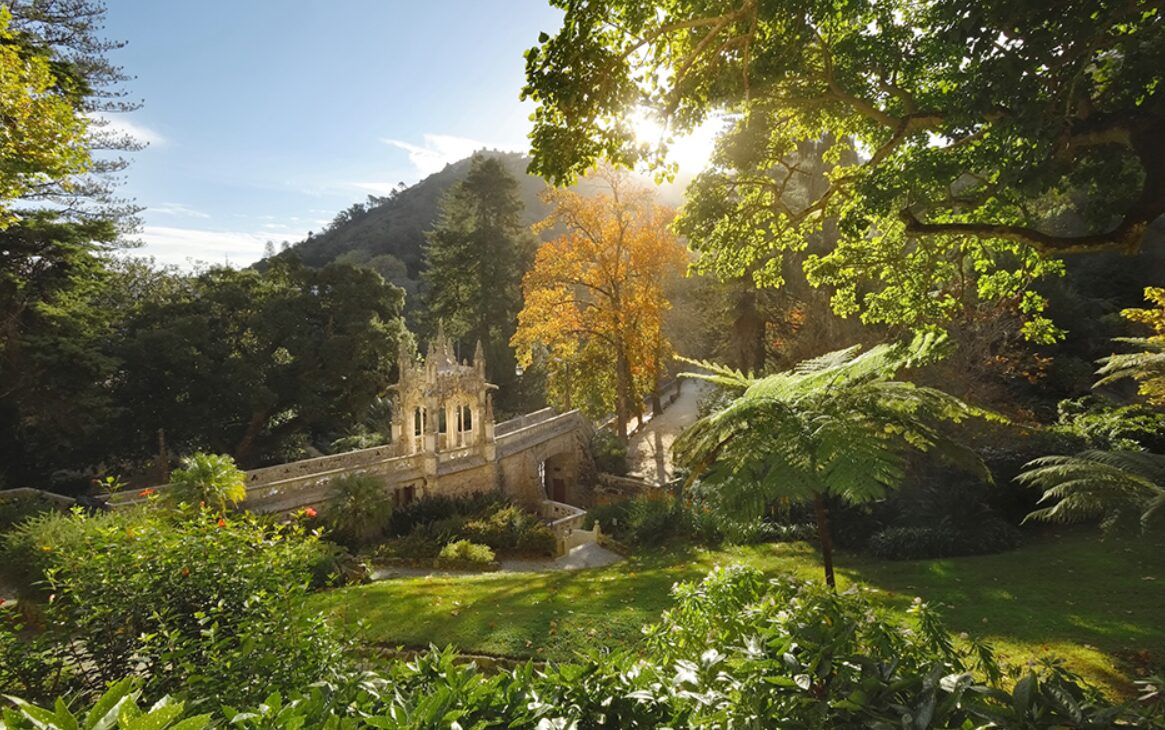
UNESCO world heritage meets lush greenery at Sintra’s Quinta da Regaleira. Photograph: Fundação Cultursintra FP
Although he only stayed for three days, Lord Byron was so taken by the “glorious Eden” of Sintra, Portugal, that he wrote his poem “Childe Harold’s Pilgrimage” at the town’s Lawrence Hotel. Since his 1809 visit, much of the surrounding landscape—the bouldered rump of the Serra de Sintra mountain range, quaint villages shaded by eucalyptus and pine forests at its foothills, leading towards coastal cliffs dropping sharply into the Atlantic—appears unchanged, except for the steady influx of visitors.
A long-term summer retreat for royalty, aristocrats, and foreign magnates, Sintra sees Madonna’s 18th-century Moorish Revival mansion neighboring Princess Elisabeth von Schmieder’s Quinta da Alegria royal estate, both within spitting distance of Brazilian entrepreneur Renato de Albuquerque’s former summer residence, newly transformed into the Albuquerque Foundation, to house his collection of more than 2,500 pieces of Ming and Qing dynasty export porcelain, alongside contemporary ceramic art. “Sintra is like a child’s dream, a madman’s dream, a poem, a painting,” French designer Philippe Starck, another local homeowner, told Spanish newspaper El País. “It’s where the most beautiful houses in the world are,” and where Starck goes to “get away from it all.”
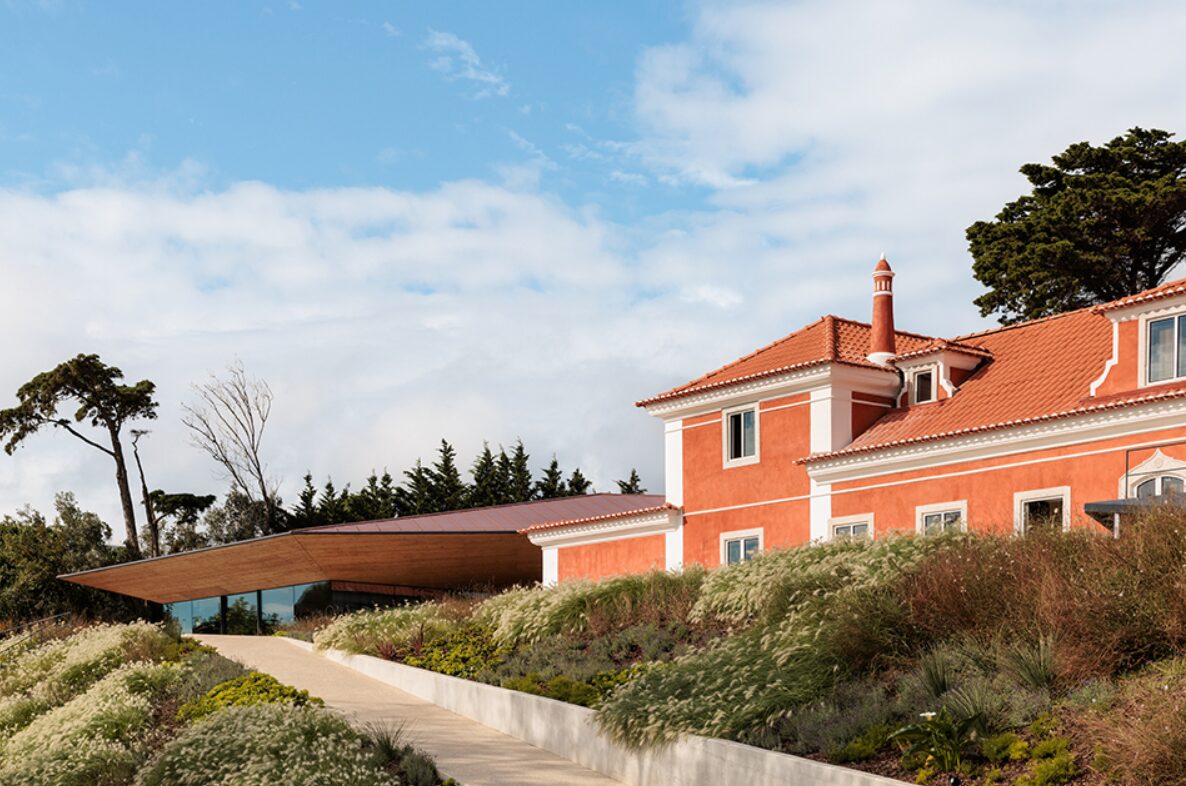
The newly opened Albuquerque Foundation. Photograph: Francisco Nogueira, Courtesy The Albuquerque Foundation
Ancient empires, from the Celts to the Moors, have left their mark across millennia, but it was Ferdinand II of Portugal who transformed Sintra into the center of 19th-century European Romantic architecture. The ‘artist king’ erected Pena National Palace, an eclectic castle with operatic towers of Manueline and Moorish influence, on the ruins of an old Hieronymite monastery in 1839. The winding Rua Barbosa du Bocage links it with Sintra’s other iconic landmarks, the Palácio de Monserrate and the Quinta da Regaleira. These, along with many monuments couched in mossy greenery, offer a sensory journey well deserving of the area’s UNESCO World Heritage status.
Quinta da Beloura, a luxury residential community designed by Renato de Albuquerque in the 1990s, sits next door to his new foundation, while, with clipped precision, more modular villas by RCA (Regino Cruz Arquitectos) and Hyde + Hyde snake around the 18-hole Pestana Beloura golf course, designed by American golfing architect Rocky Roquemore. The nearby equestrian center hosts polo and dressage, and the community’s notable residents include footballer Cristiano Ronaldo, American businessman Shahal M. Khan, and several former Portuguese prime ministers.
In Sintra’s northern foothills, Colares is another property hotspot. Cobbled-lined streets lead to Pombaline-style residences and late 19th-century alpine chalets while its sandy loam marks it out as one of Portugal’s oldest wine terroirs, where rare varietals ripen under the sun at the Quinta do Casas Novas and Adega Viúva Gomes vineyards. A flea market opens on Saturdays opposite the Ribeirinha de Colares restaurant, and several grand estates mean Colares has some of the highest property prices in the region.
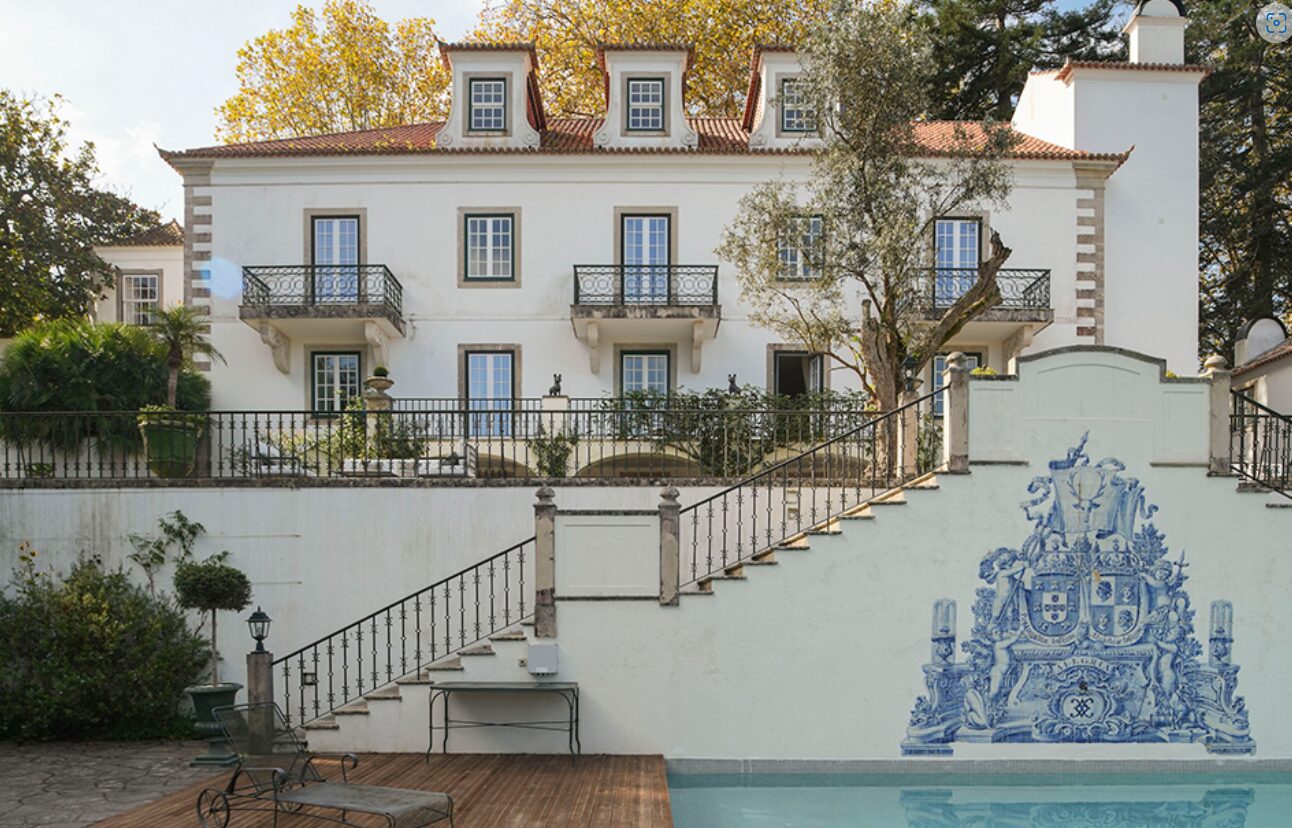
Sintra, Portugal | Portugal Sotheby’s International Realty
Quinta da Bella Vista, the former home of English crime writer Arthur Conan Doyle, sits a few miles outside the village. The 10-acre estate is built of multiple properties in Palladian architecture with neo-Gothic and neo-Moorish hints. Following Doyle’s death in 1930, his playboy son Adrian inherited the run of the grounds and expanded it into a luxury rental, hosting everyone from South African poet Roy Campbell to American actor Gloria Swanson. Meanwhile, Princess Margaret caused a stir when nearby chalets were shuttered as she bathed in the pool of the Casa Holstein hotel.
In many ways Sintra is still a resort town. The residential property market attracts international buyers from Brazil, the United Kingdom and France, with a recent surge from North America. In 2023, Sintra registered 63,220 foreign residents, an increase of 32.8% on the previous year. Portuguese real estate has boomed since the introduction of the Non-Habitual Resident regime and Golden Visa schemes, although the government has excluded real-estate investments as a pathway to residency as of 2023. The programme now requires a minimum investment of $520,000 (€500,000) in eligible funds, venture capital or business ventures, or a charitable contribution of at least $260,000 (€250,000)—still attractive terms.
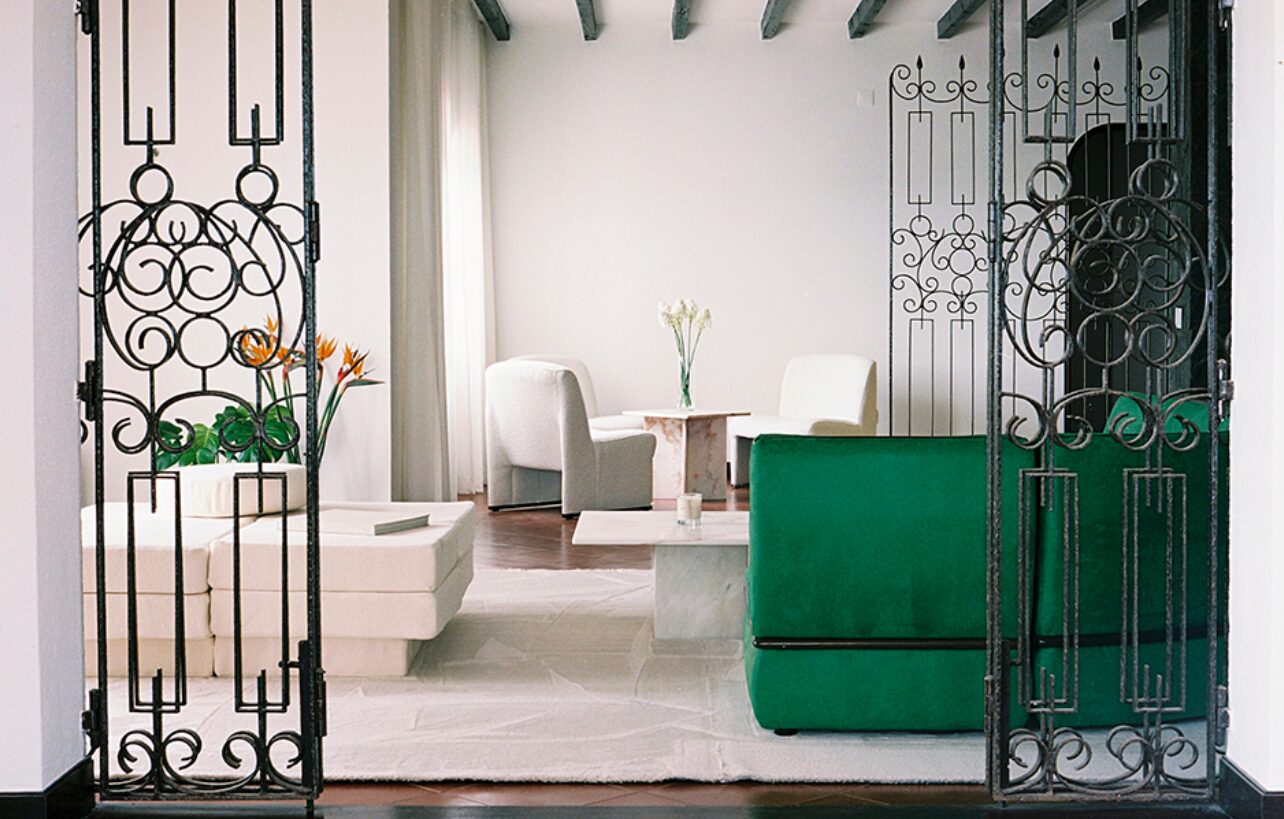
Hollywood elegance in the lobby of the boutique hotel, Marqi. Photograph: Mikkel Kristensen
Creative projects are flowering in unexpected corners, like the farm-restaurant Campo Escondido and the artistic residency La Nave. This has also sparked a new wave of hospitality with a more contemporary edge. Hotel Marqí offers a Hollywood-inspired atmosphere with cinematic detail, and the slick Argentinian duo, Nicolás Lehmann and Franco Bordoni, have acquired Quinta Santa Maria Sintra and the 300-year-old Palácio da Fonte Nova in Queluz, where they have installed Michelin-starred chef Joachim Koerper.
While Sintra’s sense of quiet luxury persists, this fresh influx of residents in search of their own private “Eden” certainly seems to be ushering in a new era.