
 Photo: Guwahati International Airport Limited
The journey is as stunning as the destination when flying through one of these incredible architectural spaces
Beautiful airport terminals are more than just feats of architecture. They reaffirm an important reminder ahead of a traveler’s trip: that the journey can be as stunning as the destination. Recently, the Prix Versailles, a prestigious series of international architecture awards, announced a crop of exceptionally designed airports, including two in the US. These winners reflect local landscapes and cultural identities in their designs, creating a warm welcome for visitors and locals alike. Below, see the 7 most beautiful airport terminals in the world.
Terminal 3, Guangzhou Baiyun International Airport, China
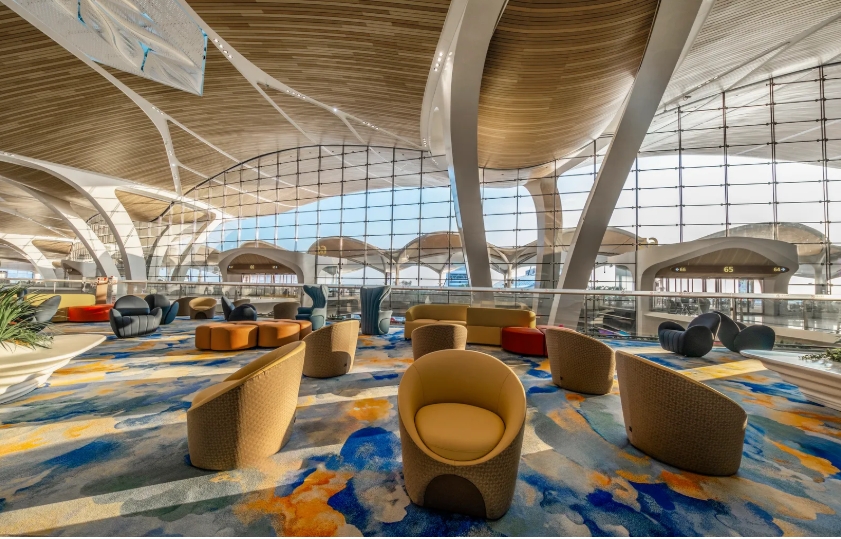
Blossom in Guangzhou is the theme of the new Terminal 3 at Guangzhou Baiyun International Airport in China, which features plenty of natural light and makes use of natural materials such as wood. Photo: Li Wei
Guangzhou in China is nicknamed the City of Flowers—so it’s only appropriate that the architects behind the new Terminal 3 at Guangzhou Baiyun International Airport sought floral inspiration. The terminal’s theme, Blossom in Guangzhou, is reflected throughout the structure: Curved forms, terraces, gardens, and atria draw on natural elements. A warm materials palette further contributes to the terminal’s appeal. Instead of metal and plastic, much of it is constructed from wood, which creates an earthy atmosphere.
Terminal 3, Frankfurt Airport, Germany
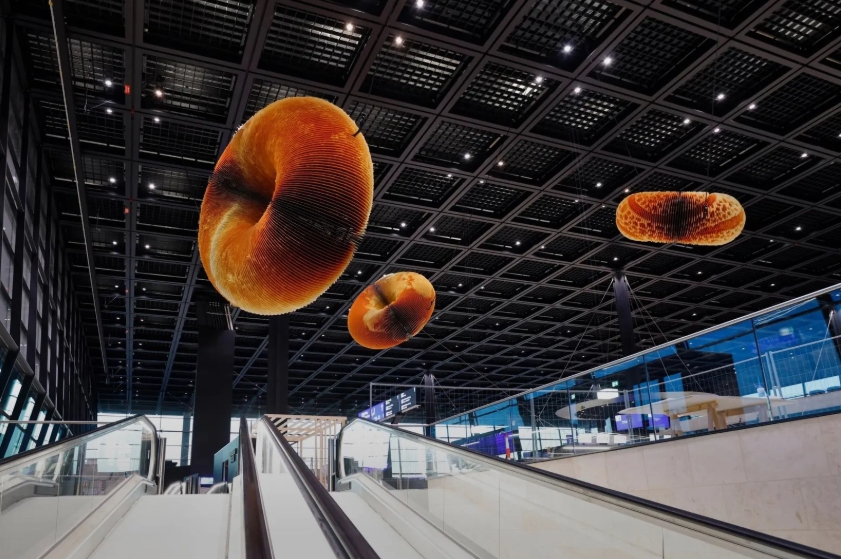
The new Terminal 3 at Frankfurt Airport is roughly the size of Frankfurt’s city center, and the layout of its piers, gates, and lounges was inspired by urban design. Photo: Frankfurt Airport
While Guangzhou takes nature as its model, the new Terminal 3 in Frankfurt is inspired by urban design: Gates and lounges are organized like streets and squares. There is also a roughly 694,000-square-foot marketplace featuring retail outlets and restaurants. But it is not just in its architecture that Terminal 3 turns to cities for inspiration. It’s practically the size of a metropolis too: With a total area of 1.89 million square feet, it’s almost as large as Frankfurt’s city center.
Terminal 2, Lokapriya Gopinath Bordoloi International Airport, Guwahati, India
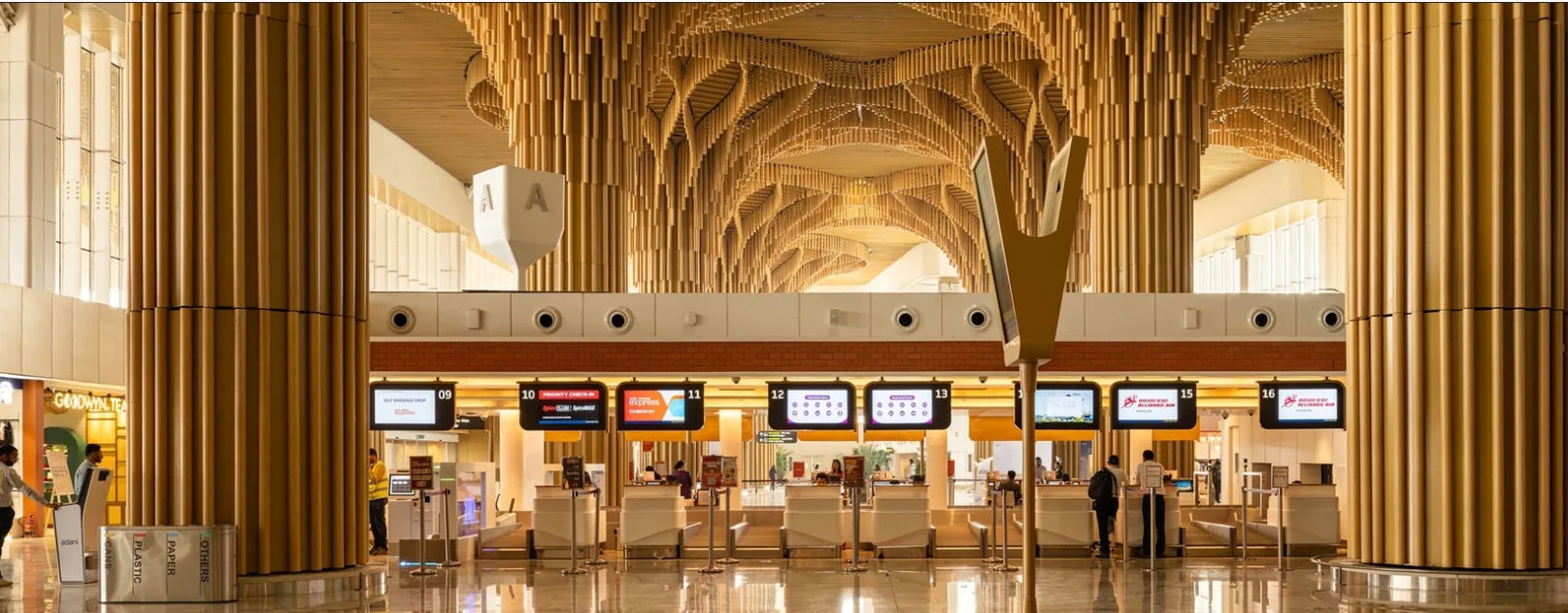
Photo: Guwahati International Airport Limited
The Lokapriya Gopinath Bordoloi International Airport in India was inspired by the bamboo orchid.
The bamboo orchid, a dramatic houseplant with bamboo-like stems and clusters of flowers, served as architect Nuru Karim’s inspiration for the design of Terminal 2 at Lokapriya Gopinath Bordoloi International Airport in Guwahati. The terminal mirrors an oversized bamboo forest, and its waiting and transit areas include displays of indigenous art and local handicrafts.
Terminal 1, Navi Mumbai International Airport, Navi Mumbai, India
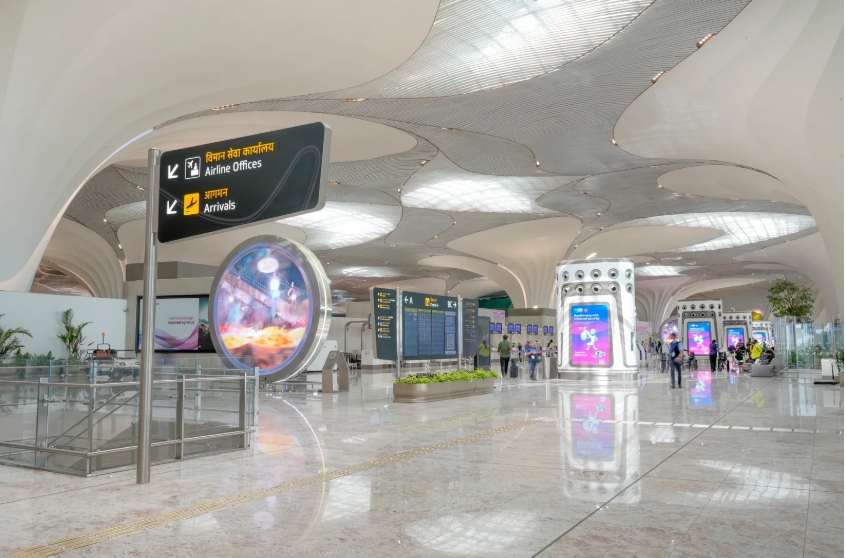
The motif of the lotus flower defines the architectural concept of Navi Mumbai International Airport. Photo: NMIA
The new terminal at Navi Mumbai International Airport also incorporates a floral motif—in this case, a lotus flower. Zaha Hadid Architects used the lotus to inspire the entire design language of the airport, from the massive roof to the fluted, flowerlike columns. Scattered among those columns are occasional interactive digital artworks that lend an unexpected element and color to the transit areas.
Techo International Airport, Phnom Penh, Kambodscha
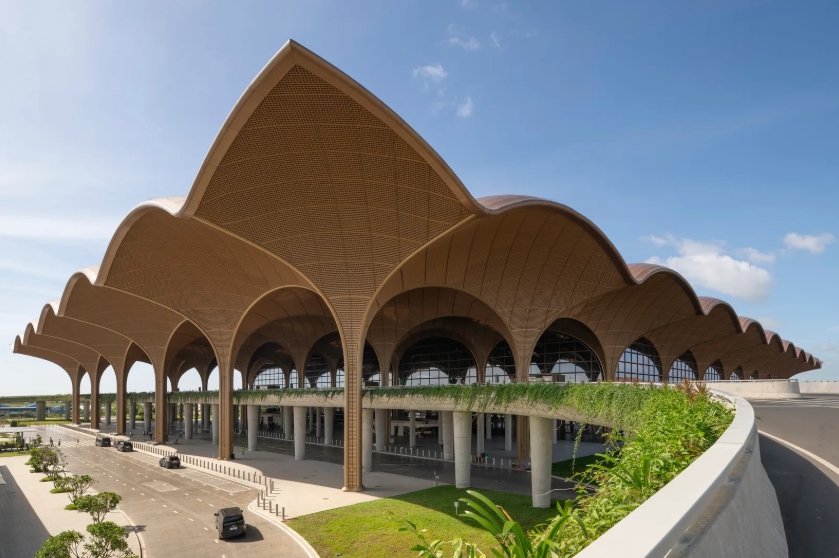
For Techo International Airport, the architectural firm Foster + Partners designed a curved roof reminiscent of Cambodia’s palaces and temples. Photo: Nigel Young
The new Techo International Airport in Phnom Penh, Cambodia, demonstrates just how strongly airports can convey a sense of regional identity. Designed by the renowned architectural firm Foster + Partners, its form is characterized by a sweeping roof that is reminiscent of the country’s palaces and temples. The ceilings visually echo the country’s traditional wickerwork and appear like they have been woven from bamboo and rattan. However, the real highlight of this structure lies not in its appearance, but in its green credentials. The “woven” feature filters the bright tropical sunlight and reduces the need to rely on mechanical ventilation to cool the terminal. Other environmentally friendly measures include an on-site solar farm, rainwater harvesting, and vertical gardens. Cambodia’s official national flower, the blossom of the Rumduol tree, is planted throughout the interiors with local species.
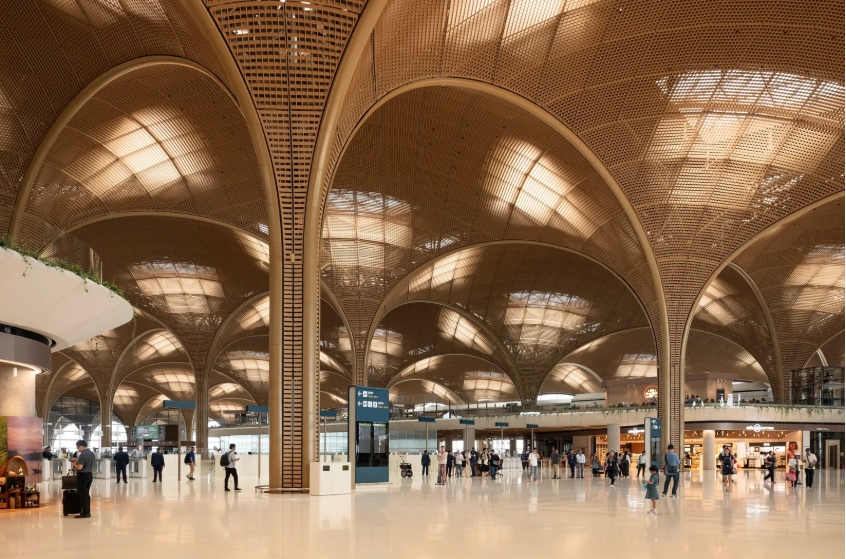
The translucent roof structure filters daylight, improving the indoor climate and reducing the airport’s energy consumption. Photo: Nigel Young
Pittsburgh International Airport, Pittsburgh, USA
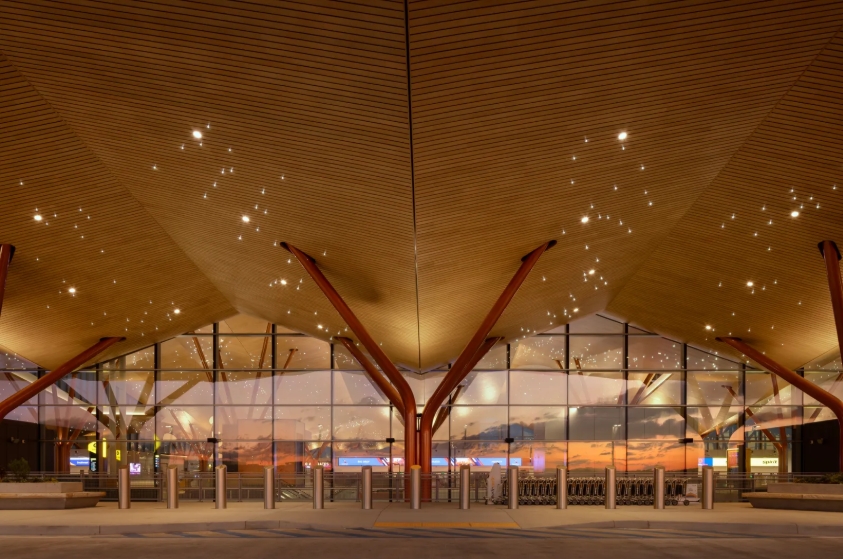
The Pittsburgh International Airport appears as if it were an extension of Pennsylvania’s Allegheny Mountains. Photo: Ema Peter
Rising beyond the city, the roof of the Pittsburgh International Airport appears like an extension of the Allegheny Mountains. Supported by 38 treelike steel columns, it creates the illusion of an artificial forest within the terminal. The building was conceived by Gensler and HDR in collaboration with Luis Vidal + Architects. The biophilic design was inspired by the wooded landscapes of Western Pennsylvania: Expansive glass façades flood the spaces with daylight, and four outdoor terraces offer opportunities for fresh air while passengers wait for their flights.
Architectural Digest – Fiona Bornhöft,